
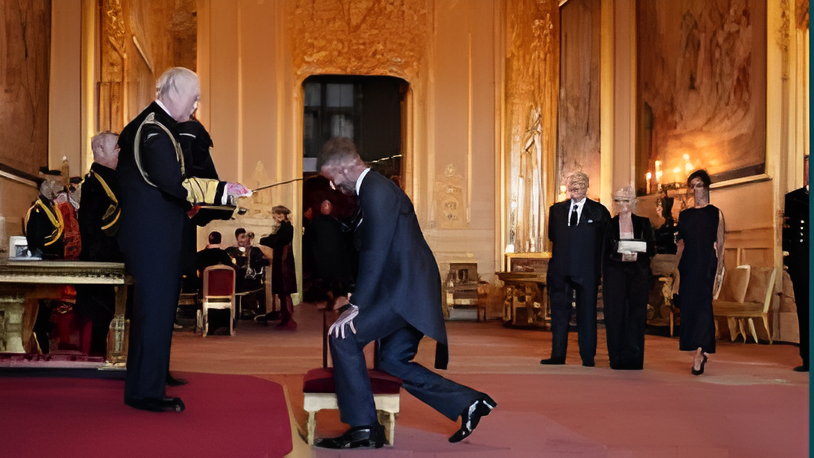
Introduction—Sir David Beckham Knighted by King Charles at Windsor
The news that David Beckham has finally been knighted by King Charles at Windsor Castle has sent ripples of pride and excitement across the globe. For decades, fans have watched Beckham not only redefine football but also become an international ambassador for sportsmanship, philanthropy, and style. Now, the former Manchester United and England captain has been officially recognized with one of the highest honors a British citizen can receive a knighthood.
Beckham, dressed sharply in a classic morning suit, stood before King Charles III in the grandeur of Windsor Castle, where he was knighted for his outstanding contributions to football and charity. The moment was emotional, not only for Beckham but also for millions of admirers who have followed his journey from the humble streets of Leytonstone to global superstardom.
For years, fans speculated when or if Beckham would ever receive the title “Sir.” Many believed it was long overdue, considering his influence both on and off the pitch. Now, that dream has come true, closing one of the most anticipated chapters in British sporting history.
A Royal Honor Decades in the Making
David Beckham’s journey to knighthood wasn’t just about football trophies or celebrity status it was a testament to decades of dedication, resilience, and service. Since his early days with Manchester United under Sir Alex Ferguson, Beckham showcased not just his trademark precision on the field but also a rare sense of professionalism that earned respect from peers and rivals alike. His leadership as England’s captain and his sportsmanship throughout his career made him a role model for millions.
After retiring from football, Beckham didn’t fade away from public life. Instead, he channeled his influence into philanthropy and global goodwill. As a UNICEF ambassador since 2005, he played a key role in championing children’s rights and raising awareness about global health issues. He has donated millions to causes close to his heart, from education to mental health initiatives. These tireless efforts off the field strengthened his case for a knighthood, turning him from a football icon into a humanitarian figure respected worldwide.
For the British Royal Family, knighthoods are awarded not merely for talent, but for legacy. Beckham’s work continues to echo far beyond stadiums shaping culture, fashion, and even charity models. His honor at Windsor represents a full-circle moment: a working-class boy from East London, now recognized as Sir David Beckham, a true ambassador of modern Britain.
Why Did David Beckham Get a Knighthood?
David Beckham was knighted for his exceptional contribution to football, global charity efforts, and his continuous role as an ambassador for the United Kingdom. The honor acknowledges not just what Beckham achieved during his playing career, but how he has used his fame to make the world better.
Throughout his career, Beckham was known for discipline and excellence. He helped Manchester United secure six Premier League titles, two FA Cups, and the 1999 UEFA Champions League trophy. His move to Real Madrid, and later to LA Galaxy, helped globalize football and bring English players to international prominence. Yet, what truly set him apart was his ability to bridge cultures from British football fans to international audiences.
After hanging up his boots, Beckham’s involvement in various charitable causes solidified his reputation. Through the 7 Fund for UNICEF, he has worked tirelessly to improve the lives of vulnerable children in more than a dozen countries. His dedication to charity, combined with his commitment to promoting British values abroad, made him an ideal candidate for knighthood.
Moreover, Beckham has long been a symbol of resilience and redemption. Despite controversies earlier in his career, he rebuilt his image through humility, hard work, and a consistent desire to give back. His knighthood celebrates not just a football legend, but a man who evolved from athlete to humanitarian hero.
Has David Beckham Been Knighted by the King Yet?
Yes, as of 2025, David Beckham has officially been knighted by King Charles III in a private yet historic ceremony at Windsor Castle. The event took place in front of a select group of dignitaries, close family members, and long-time friends. Beckham was accompanied by his wife, Victoria Beckham, and their children, all visibly emotional as he knelt before the King to receive the honor.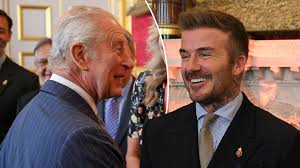
The ceremony symbolized not only Beckham’s achievements but also his long journey to earning one of Britain’s most prestigious titles. For years, speculation about his potential knighthood circulated across tabloids and online platforms, often delayed due to various bureaucratic and political factors. Now, the moment has finally arrived marking the culmination of a life lived under the global spotlight with grace and purpose.
Interestingly, Beckham’s relationship with the Royal Family has always been cordial. He was present at numerous royal events, including Prince William and Kate Middleton’s wedding, and later became known for supporting charitable endeavors aligned with the monarchy’s goals. This mutual respect between Beckham and the royals makes his knighthood feel not just earned, but deeply fitting.
The Ceremony at Windsor Castle: A Moment to Remember
The knighthood ceremony held at Windsor Castle was a defining moment in both David Beckham’s personal and professional journey. The grandeur of Windsor, steeped in royal history, provided the perfect backdrop for this monumental event. Beckham, known for his impeccable sense of style, arrived in a traditional morning suit with a subtle yet elegant demeanor a reflection of his humility despite decades of fame.
When King Charles III placed the ceremonial sword on Beckham’s shoulder, the moment symbolized far more than an honor; it was a recognition of a lifetime’s worth of dedication, sportsmanship, and service. The audience, though small and private, included Beckham’s closest family members Victoria, Brooklyn, Romeo, Cruz, and Harper who were visibly emotional as they witnessed the moment their husband and father became Sir David Beckham.
In his brief address, King Charles reportedly commended Beckham for being “a shining example of how passion and purpose can unite people across the world.” The ceremony concluded with Beckham bowing respectfully before the King, his eyes glistening with pride.
Afterward, Beckham took to social media, sharing a heartfelt message: “To receive this honor from His Majesty at Windsor is beyond words. I’ve always tried to represent my country with pride in football, in charity, and in life. Today, that journey feels complete.”
The event captured the spirit of modern Britain tradition intertwined with the contemporary. Windsor Castle, echoing with history, once again became the setting where hard work met heritage, and Beckham’s story added a new chapter to the legacy of knighthoods in the United Kingdom.
Beckham’s Reaction to Receiving His Knighthood
Few moments in David Beckham’s illustrious life have been as emotional as receiving his knighthood. Known for his calm and collected personality, Beckham was visibly moved during the ceremony. He later described it as “one of the proudest days of my life.”
In interviews following the event, Beckham revealed that the honor was not just for him, but for his family, teammates, and fans who supported him through every phase of his journey. He expressed immense gratitude toward his parents, Ted and Sandra Beckham, crediting them for instilling discipline and respect from an early age. “They’re the reason I am who I am,” he said. “My dad drove me to every training session, and my mum made sure I never gave up.”
Victoria Beckham, ever the proud wife, shared a touching post on Instagram, writing, “I couldn’t be prouder of you, David. You’ve always inspired us all not just as a footballer, but as the most incredible husband and father.” The post went viral within hours, with millions of fans joining in celebration.Newsusas
Beckham also highlighted that he views his knighthood as a responsibility, not just an achievement. He plans to continue supporting global humanitarian efforts, particularly through the UNICEF 7 Fund, which focuses on improving the lives of children in need. For Beckham, being knighted wasn’t about prestige it was about carrying forward a mission of kindness, humility, and service.
Why Was Beckham’s Knighthood Denied in the Past?
For years, the question “Why was Beckham’s knighthood denied?” puzzled fans and fueled media speculation. Beckham had long been expected to receive the honor, yet it was reportedly delayed due to complications involving his financial and tax affairs. Around 2017, leaked emails suggested that Beckham expressed frustration over not being knighted, leading to widespread public discussion.
According to multiple reports, Beckham’s name was temporarily placed on the “red list” a confidential record maintained by the Honours Committee to ensure nominees are free from any legal or ethical concerns. At the time, scrutiny arose over Beckham’s involvement with a charity fund linked to tax relief programs. Although no wrongdoing was ever proven, such issues can delay or suspend nominations for honors like knighthoods.
However, Beckham handled the controversy with dignity. Over the years, he distanced himself from the negative attention and focused on rebuilding trust through genuine humanitarian efforts. His consistency, transparency, and continued charitable contributions gradually repaired his public image.
Eventually, with all matters clarified, Beckham’s name was re-evaluated and approved by the committee paving the way for his 2025 honor. His journey from temporary rejection to royal recognition serves as a reminder that true legacy isn’t defined by setbacks, but by perseverance and integrity.
Overcoming Challenges: From Controversy to Recognition
David Beckham’s road to knighthood wasn’t smooth. His journey was filled with incredible highs World Cup appearances, iconic goals, record-breaking sponsorships but also moments of deep personal challenge. Yet, it’s precisely his ability to overcome adversity that makes his knighthood so meaningful.
One of the most significant challenges came early in his career during the 1998 FIFA World Cup, when Beckham was infamously sent off against Argentina. The backlash was brutal newspapers vilified him, effigies were burned, and he was blamed for England’s exit from the tournament. For most athletes, such public scrutiny might have ended their careers. But Beckham responded with quiet determination. Within a few years, he won the treble with Manchester United in 1999 and later became the England captain, leading his nation with renewed pride.
Another major hurdle was the email leak scandal in 2017, where private messages were taken out of context to suggest he was frustrated over not being knighted. Rather than retaliate, Beckham chose silence, letting his actions speak louder than words. He continued to dedicate his time and money to UNICEF projects, children’s hospitals, and global development campaigns. Over time, the narrative shifted from scandal to sincerity.
What truly stands out about Beckham’s character is his resilience. He never let public opinion define his worth. Instead, he focused on bettering himself and those around him. His knighthood today serves as a redemption story proof that grace, persistence, and integrity can outlast any controversy. Beckham’s name, once linked to football drama, is now etched in the history books as a national hero, embodying the best of British perseverance.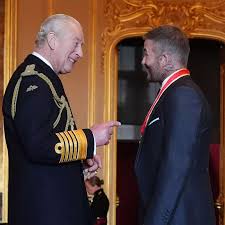
What Syndrome Does David Beckham Have?
Over the years, fans have often wondered, “What syndrome does David Beckham have?” The answer lies in his openness about Obsessive-Compulsive Disorder (OCD). Beckham has publicly discussed his struggle with this condition, bringing awareness to a topic that’s often misunderstood or stigmatized.
OCD is a mental health disorder characterized by recurring thoughts (obsessions) and repetitive behaviors (compulsions). For Beckham, it manifests in his need for symmetry, organization, and precision. In several interviews, he admitted that he feels compelled to arrange items in straight lines, match furniture, or ensure that household items are perfectly aligned. “Everything has to be in pairs,” Beckham once said. “If there are three cans in the fridge, I’ll throw one away just to make it even.”
While OCD might sound like a minor quirk, it can be mentally exhausting. Beckham’s willingness to talk about it has helped millions realize that mental health struggles can affect anyone even global superstars. Instead of hiding his condition, he uses his platform to normalize conversations about mental well-being.
Beckham also revealed that his OCD doesn’t hinder his life; it drives his discipline. That perfectionism has translated into every area of his career from his free kicks to his impeccable fashion sense. By sharing his experience, he’s shown that living with OCD doesn’t define you; it simply adds another layer to the complexity of being human.
Understanding Beckham’s Obsessive-Compulsive Disorder (OCD)
To truly understand David Beckham’s OCD, one must see it not as a flaw, but as a part of his unique personality and success formula. His condition is a testament to how structure and focus, when channeled properly, can become tools for greatness. Beckham’s meticulous attention to detail has always set him apart whether it’s his precise passes on the pitch or his clean, organized approach to business and branding.
Beckham once shared that his OCD made hotel stays difficult because he couldn’t rest until every brochure, pen, and piece of furniture was perfectly aligned. “I’ll spend hours getting things just right,” he said. This compulsion might seem trivial, but for Beckham, it’s about achieving inner balance in a world of chaos.
Interestingly, psychologists often note that individuals with OCD can excel in fields that demand high levels of precision and routine exactly what football requires. Beckham’s training sessions, renowned for repetition and exactness, reflect that same mindset. His obsession with improvement turned him into one of the greatest set-piece specialists in football history.
Today, Beckham uses his voice to advocate for mental health awareness. He emphasizes that seeking help and acknowledging mental health conditions should never be viewed as weakness. His honesty has encouraged countless fans to open up about their own struggles, proving that vulnerability and strength can coexist.
Beckham’s story with OCD is ultimately one of empowerment showing that even our challenges can become our greatest strengths when faced with courage and understanding.
What Disabilities Does David Beckham Have?
Although David Beckham is widely recognized for his athletic prowess and near-perfect physique, he has been open about dealing with Obsessive-Compulsive Disorder (OCD) a mental health condition that can sometimes be classified under the spectrum of psychological disabilities. While Beckham does not have a physical disability, his OCD has been a significant part of his personal journey, shaping how he approaches life, success, and even parenthood.
Beckham has described OCD as something that “never goes away” but can be managed through self-awareness and routine. His condition compels him to maintain order and symmetry, and while that may sound trivial to some, it often consumes mental energy. For instance, he has mentioned that he can’t sleep unless everything around him is organized precisely. He often rearranges hotel rooms, lines up drinks or toiletries, and ensures that spaces look and feel balanced.
Despite these challenges, Beckham has transformed what could have been a barrier into an advantage. His OCD helped him develop unmatched discipline, meticulousness, and focus qualities that defined his football career. Every free-kick, pass, and assist he executed was the product of immense attention to detail, a reflection of the same mindset that drives his daily life.
Moreover, Beckham’s openness about his condition has helped destigmatize discussions about invisible disabilities. By acknowledging his struggles, he’s inspired others to embrace their differences rather than hide them. In a world where athletes are often portrayed as flawless, Beckham’s honesty about his mental health made him more relatable and respected.
In many ways, Beckham’s journey demonstrates that disabilities, whether visible or hidden, do not determine one’s potential. They simply add another layer to a person’s story. His achievements, despite his OCD, prove that strength isn’t about perfection it’s about perseverance.
What Has David Beckham Been Diagnosed With?
David Beckham has been diagnosed with Obsessive-Compulsive Disorder (OCD), a condition that causes individuals to experience repetitive thoughts and behaviors. However, unlike many who struggle in silence, Beckham has turned his diagnosis into a platform for awareness and acceptance. He has candidly discussed how OCD affects his daily life but also how he’s learned to live harmoniously with it.
OCD can manifest in various ways, from counting objects repeatedly to obsessing over order and cleanliness. For Beckham, it’s mostly about symmetry and organization. In one interview, he admitted, “I’ll clean the house from top to bottom. Everything has to be perfect every candle, every piece of furniture.” This compulsion for neatness, while exhausting at times, gives him a sense of control and calmness amidst his busy lifestyle.
Beckham’s diagnosis also sheds light on the importance of mental health in sports. Athletes often face immense pressure to perform flawlessly, yet very few speak openly about the toll it takes on their mental well-being. Beckham’s transparency helped normalize conversations about mental health, especially among younger fans and aspiring footballers.
Interestingly, Beckham views his OCD not just as a struggle but as part of what makes him exceptional. The same perfectionism that drives his compulsions also fueled his relentless training and pursuit of excellence on the field. In his own words, “It’s not something I’m ashamed of. It’s part of who I am.”
Through his example, Beckham has become a global advocate for mental health reminding people that even the most successful individuals battle invisible challenges. His willingness to share his experience continues to break stereotypes and encourage others to seek help without fear or stigma.
What Did David Beckham Get from the Queen?
Before being knighted by King Charles III, David Beckham received several honors from Queen Elizabeth II in recognition of his contributions to sports and public service. The most notable of these was the Order of the British Empire (OBE), which he received in 2003. This honor marked an important milestone in his life, setting the stage for his eventual knighthood.
The OBE was awarded for Beckham’s exceptional achievements in football and his efforts to promote British values on the international stage. At that time, Beckham was captaining the England national team and helping Manchester United dominate European football. The award was presented personally by Queen Elizabeth II at Buckingham Palace, a moment Beckham later described as “an incredible honor that I will never forget.” He attended the ceremony with his wife, Victoria, and the couple famously posed outside the palace with their medals.
Beyond the OBE, Beckham also enjoyed a warm relationship with the late Queen. He represented the UK during several global events, including the 2012 London Olympics, where he played a key role in promoting Britain’s image worldwide. He even joined long queues to pay his respects to Queen Elizabeth II following her passing in 2022 a gesture that touched many hearts and reflected his deep respect for the monarchy.
In many ways, the OBE from the Queen was just the beginning of Beckham’s royal recognition. It was the first step on a journey that would ultimately lead him to Windsor Castle, where King Charles III would knight him more than two decades later. His path from OBE recipient to Sir David Beckham represents a legacy of service, humility, and national pride.
The Impact of Beckham’s Charity Work on His Knighthood
While David Beckham’s success on the pitch is legendary, it was his commitment to philanthropy and humanitarian causes that solidified his eligibility for knighthood. Football made him famous, but charity made him honorable. For years, Beckham has used his fame and influence to create tangible, life-changing differences around the world a core reason King Charles recognized him with this royal title.
One of Beckham’s most impactful contributions is his long-term partnership with UNICEF, where he has served as a Goodwill Ambassador since 2005. In 2015, he launched the 7 Fund for UNICEF, named after his iconic jersey number. This initiative focuses on protecting and improving the lives of vulnerable children across Asia, Africa, and Latin America. From providing access to clean water and education to campaigning against violence and child exploitation, Beckham has become a global voice for compassion and equality.
Beckham’s humanitarian work extends beyond UNICEF. He has been actively involved with Help for Heroes, Malaria No More, and the Elton John AIDS Foundation. His philanthropic reach is vast encompassing health, education, disaster relief, and youth empowerment. In 2020, during the height of the COVID-19 pandemic, Beckham donated millions to support frontline workers and struggling families, reinforcing his commitment to giving back even during global crises.
Perhaps what sets Beckham apart is his hands-on involvement. Unlike many celebrities who simply donate money, Beckham personally visits children’s hospitals, attends relief missions, and advocates for mental health and equality. His sincerity and consistency have earned him admiration not just from fans, but also from world leaders and humanitarians alike.
Ultimately, his knighthood is a reflection of how Beckham’s heart matched his skill. Beyond trophies and accolades, he’s built a legacy rooted in kindness and service. For the monarchy, that combination of excellence and empathy made him the perfect symbol of modern British values a man who not only inspires but also acts.
How Beckham Represents Modern British Royal Honors
In today’s world, royal honors like knighthoods are no longer just about nobility or aristocratic lineage they’re about achievement, influence, and contribution to society. David Beckham’s elevation to “Sir” status perfectly captures what a modern British honor stands for: dedication, integrity, and the ability to make a global impact while staying true to one’s roots.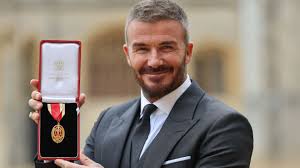
Beckham’s story aligns beautifully with the values that King Charles III wishes to promote sustainability, charity, and unity. From his eco-friendly ventures to his advocacy for underprivileged children, Beckham has consistently embodied leadership that inspires across generations. Unlike traditional knights of the past, Beckham’s knighthood represents a fusion of sports, celebrity, and humanitarianism a blend that resonates with a modern, multicultural Britain.
Furthermore, Beckham has always carried himself with diplomacy and grace. Whether attending royal events, supporting British cultural causes, or serving as an ambassador for England abroad, he has remained an unofficial representative of the UK’s global reputation. His knighthood, therefore, is not only a personal achievement but also a symbol of national identity in an evolving Britain.
In many ways, Beckham redefines what it means to be knighted in the 21st century. He’s relatable a man who worked his way from a humble background to global stardom without ever forgetting where he came from. His story connects with ordinary citizens and demonstrates that honor and decency can come from determination, not privilege.
By honoring Beckham, King Charles also sent a clear message: the monarchy recognizes not only those who serve the Crown directly, but those who serve humanity. Beckham’s knighthood stands as a bridge between the royal tradition and the modern world proof that true greatness lies in both achievement and altruism.
Global Reaction to Beckham’s Knighthood
The world erupted in celebration when news broke that David Beckham had been knighted by King Charles III. Social media platforms were flooded with congratulations, while major media outlets across continents ran headlines praising “Sir David Beckham.” Fans, celebrities, and fellow athletes alike expressed overwhelming joy, calling it a long-overdue recognition for a man who had done so much for football and beyond.
From London to Los Angeles, tributes poured in. Former teammates like Gary Neville and Rio Ferdinand congratulated Beckham, emphasizing his leadership and friendship. Global icons such as Cristiano Ronaldo and Lionel Messi also extended their praise, acknowledging Beckham’s influence in shaping the modern era of football. The President of UNICEF issued a public statement thanking Beckham for his “unwavering dedication to children’s welfare,” highlighting that his knighthood “shines a light on kindness and purpose.”
Public sentiment mirrored that of admiration and gratitude. British citizens took to online forums and local news outlets, calling him a “national treasure” and “the knight we all wanted.” Even those who weren’t ardent football fans admitted that Beckham’s charity work and character made him a worthy recipient.
Internationally, the recognition was seen as a triumph for sports diplomacy a reminder that athletes can be ambassadors of peace, culture, and humanity. In countries like the U.S., Spain, and Japan, where Beckham’s influence remains strong, fans celebrated his achievement with pride, seeing it as a universal victory for integrity and perseverance.
What makes the global reaction so powerful is that Beckham’s knighthood transcends borders. It’s not just about honoring a British sportsman it’s about honoring a human being who used his platform to make the world a better place. The title “Sir David Beckham” doesn’t just represent prestige; it represents hope, humility, and heart.
Has Anyone Been Stripped of Their Knighthood?
The question of whether anyone has ever been stripped of a knighthood often arises whenever a new “Sir” is announced, especially one as globally famous as David Beckham. The answer is yes knighthoods and other honors can be revoked under certain circumstances. This typically happens when a recipient’s later actions are deemed to bring disrepute to the Crown or the Honours system.
The most famous example is Sir Fred Goodwin, the former CEO of the Royal Bank of Scotland, who was stripped of his knighthood in 2012 following the financial crisis. His leadership failures were seen as contributing to one of the worst collapses in UK banking history. Similarly, Rolf Harris, a former entertainer, lost his title after being convicted of serious crimes. These instances show that the honor, while prestigious, is not permanent and can be withdrawn if the recipient’s conduct contradicts the principles of integrity and service.
However, David Beckham’s record stands in stark contrast to such examples. His career, though not free of controversy, has consistently demonstrated resilience, honesty, and redemption. He has been a role model for professionalism and philanthropy someone who uses his influence for positive global impact. The Honours Forfeiture Committee, which reviews such matters, only intervenes in cases involving criminal activity or moral misconduct, neither of which applies to Beckham.
If anything, Beckham’s knighthood strengthens the integrity of the modern Honours system by highlighting that recognition is based not just on fame, but on lifelong contribution and character. His journey from sportsman to global humanitarian exemplifies why the knighthood still holds meaning in a modern, merit-based Britain.
In essence, while some have lost their titles due to scandal or corruption, Beckham’s name stands tall as an example of how to earn and preserve royal honor with dignity and grace.
The Difference Between an OBE and a Knighthood
To understand the full significance of Beckham’s knighthood, it’s helpful to know how it differs from other royal honors like the OBE (Order of the British Empire), which he previously received from Queen Elizabeth II in 2003.
The OBE recognizes individuals who have made major contributions at a national level often in fields like arts, science, charity, or sports. While prestigious, it’s typically awarded earlier in a person’s career to honor their rising influence. The knighthood, however, is reserved for individuals who have demonstrated sustained excellence and long-term impact often marking the pinnacle of a lifetime of service.
Here’s a quick comparison:
| Honor | Full Title | Type of Recognition | Typical Recipients |
|---|---|---|---|
| MBE | Member of the Order of the British Empire | Service to community or local achievement | Local leaders, activists, artists |
| OBE | Officer of the Order of the British Empire | Major national contribution | Business leaders, athletes, scientists |
| CBE | Commander of the Order of the British Empire | Leading role at national or regional level | Innovators, senior professionals |
| Knighthood (Sir/Dame) | Knight or Dame Commander | Exceptional, long-term service or achievement | Global leaders, cultural icons |
David Beckham’s progression from OBE to knighthood mirrors his growth from national sports icon to international humanitarian leader. His knighthood isn’t just an upgrade in title it’s a recognition that his influence transcends football, impacting communities and causes worldwide.
It’s also symbolic of how the British Honours system has evolved. No longer limited to politicians or war heroes, knighthoods today celebrate individuals who unite people, inspire change, and carry the spirit of modern Britain across borders. Beckham’s journey from “David Beckham, OBE” to “Sir David Beckham” perfectly embodies that evolution.
What Beckham’s Knighthood Means for Future Generations
David Beckham’s knighthood carries a message far beyond football fields and royal ceremonies it’s an inspiration for future generations. His story teaches that greatness is earned, not given, and that success is defined not by wealth or fame, but by character, kindness, and contribution.
For young athletes, Beckham’s journey illustrates the importance of discipline, humility, and perseverance. He showed that even global fame should be balanced with social responsibility. His willingness to speak openly about challenges such as mental health and OCD has also made him a role model for emotional honesty proving that vulnerability and strength can coexist.
For the British public, Beckham’s recognition serves as a reminder that hard work from any background can lead to royal recognition. Coming from a modest family in East London, Beckham’s rise to knighthood is a modern-day fairy tale rooted in authenticity, dedication, and love for his country. His title of “Sir” is not just a personal achievement it’s a symbol of possibility for millions who dream of making a difference.
Moreover, Beckham’s continued charity work ensures that his impact will outlive his playing career. From building schools and hospitals to supporting youth programs, his post-football life has arguably been more influential than his years on the pitch. For future generations, his story will stand as proof that true legacy is built on compassion and service, not just celebrity.
Sir David Beckham represents a new kind of knight one who wears compassion as his armor and humanity as his sword. His knighthood isn’t just an end it’s the beginning of a new chapter in his mission to inspire, uplift, and serve.
Conclusion: The Legacy of Sir David Beckham
The knighthood of Sir David Beckham marks more than just another chapter in the life of a football legend it’s the culmination of a story defined by perseverance, purpose, and passion. From his early days in East London to captaining England and representing some of the world’s greatest football clubs, Beckham’s rise has always been grounded in hard work and humility. His new title recognizes not just his brilliance on the pitch, but also his tireless work off it as a philanthropist, ambassador, and inspiration for millions.
What makes Beckham’s legacy truly special is his ability to remain relatable despite global fame. He’s a superstar who still values family, kindness, and duty. Whether comforting children in war-torn countries or promoting mental health awareness, Beckham has consistently used his platform for good. His knighthood, bestowed by King Charles III, therefore stands as a symbol of how modern-day heroes are defined not by privilege, but by purpose.
In many ways, Beckham’s story mirrors the evolution of Britain itself a nation that honors tradition yet embraces change. He’s not a knight in shining armor from old tales, but a contemporary figure whose weapon is compassion and whose victory lies in inspiring others. His life reminds us that every act of kindness, every display of perseverance, and every choice to serve others contributes to a legacy far greater than fame.
As “Sir David Beckham,” he now carries not just a title, but a torch one that lights the path for those who dream of achieving greatness through integrity and heart. His journey proves that success is fleeting, but legacy is eternal.
FAQs
1. Why did David Beckham get a knighthood?
David Beckham received a knighthood for his outstanding contributions to football and his extensive humanitarian work. His decades-long involvement with UNICEF, commitment to children’s rights, and promotion of British values worldwide made him deserving of one of the UK’s highest honors.
2. Has David Beckham been knighted by the king yet?
Yes, in 2025, David Beckham was officially knighted by King Charles III during a ceremony at Windsor Castle. The event was attended by his family and close associates, marking a long-awaited and emotional milestone in his life.
3. Why was Beckham’s knighthood denied before?
Beckham’s knighthood was reportedly delayed due to a tax-related controversy involving charitable funds in the late 2010s. Although no wrongdoing was ever proven, his name was temporarily placed on a review list. After years of continued public service and charity work, the matter was cleared, paving the way for his knighthood.
4. What syndrome or condition does David Beckham have?
David Beckham has been open about living with Obsessive-Compulsive Disorder (OCD). This condition causes him to seek order and symmetry in his surroundings. He’s spoken publicly about how it affects him but also how it drives his discipline and success.
5. Has anyone ever been stripped of their knighthood?
Yes, individuals such as Sir Fred Goodwin and Rolf Harris have had their knighthoods revoked for conduct deemed damaging to the reputation of the Honours system. However, David Beckham’s impeccable record and consistent humanitarian service make him one of the most respected recipients of the title.