


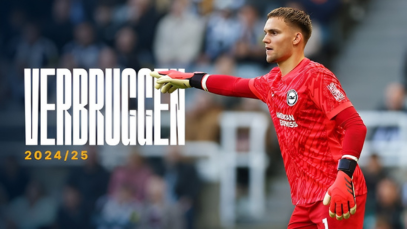
Introduction: Verbruggen: Sharpen small margins for wins
Bart Verbruggen has emerged as one of the brightest young goalkeepers in the Premier League. Known for his composure, athleticism, and tactical intelligence, the Dutch stopper represents the new generation of modern goalkeepers who can both save goals and start attacks. Since joining Brighton & Hove Albion, Verbruggen’s calm presence at the back has impressed fans and pundits alike. His story is one of perseverance, talent, and the relentless pursuit of improvement sharpening small margins to achieve great victories.
Born in Mechelen, Belgium, Verbruggen’s career trajectory has been meteoric. From his early days in the Belgian league to commanding the box in the English Premier League, he embodies the modern goalkeeper’s essence. His ability to read the game, distribute the ball under pressure, and make decisive saves is turning Brighton into one of the most tactically advanced teams in England.
In this article, we’ll explore everything about Bart Verbruggen his salary, status at Brighton, strengths, injury updates, and comparisons with some of football’s biggest names. We’ll also take a look at related questions fans often ask, such as who Brighton’s biggest rivals are, who the top earners at the club might be, and whether any footballer has ever scored 900 goals.
How Much Does Verbruggen Make in Brighton?
When Bart Verbruggen joined Brighton & Hove Albion, the move was seen as a long-term investment in one of Europe’s most talented young goalkeepers. According to reports, Verbruggen earns an estimated £35,000 per week, which translates to roughly £1.8 million per year. This is a solid wage for a player still in his early 20s, especially considering Brighton’s reputation for maintaining a balanced wage structure.
While his salary may not yet be on par with Premier League veterans, it reflects the club’s belief in his potential and their commitment to nurturing young talent. Verbruggen’s earnings are expected to grow in line with his performances and experience. As he continues to establish himself as a key player, contract extensions and performance bonuses could significantly increase his income in the coming seasons.
Compared to some of his teammates, Verbruggen’s current wage sits in the mid-range bracket. However, the club’s philosophy isn’t about paying astronomical wages; it’s about performance, consistency, and growth. Brighton has built a sustainable model where rising stars like Verbruggen are rewarded as they develop, rather than overpaid before they’ve proven themselves.
Verbruggen’s salary also reflects Brighton’s long-term vision investing in potential and allowing young players to flourish without the pressure of inflated contracts. As his reputation builds and if he maintains his current trajectory, it wouldn’t be surprising to see his weekly wages rise significantly, possibly doubling in the next contract renewal.
Who Is Brighton’s No. 1 Goalkeeper?
Brighton & Hove Albion’s goalkeeping situation has been one of healthy competition. As of the latest season, Bart Verbruggen is considered Brighton’s No. 1 goalkeeper. However, he faces competition from Jason Steele, who has been instrumental in Brighton’s progress under Roberto De Zerbi.
De Zerbi’s tactical approach places immense importance on goalkeepers who can play with the ball at their feet. Verbruggen’s ability to control possession, distribute accurately, and remain calm under pressure has given him the edge. His composure and vision align perfectly with De Zerbi’s philosophy of building from the back.
While Steele brings leadership and experience, Verbruggen’s agility, reflexes, and potential make him the future of Brighton’s defense. His performances against top sides like Liverpool and Arsenal have proven his readiness for the Premier League challenge. He doesn’t just save shots he initiates plays, acting almost like an outfield player during build-ups.
That said, the competition between the two goalkeepers has benefited the entire squad. Training sessions are intense, with both players pushing each other to improve. It’s this healthy rivalry that ensures Brighton remains strong between the posts, regardless of who starts.
In the long run, Verbruggen’s youth and modern playing style make him the ideal long-term first-choice goalkeeper for Brighton. The trust from the manager and the confidence from the fans indicate that the Dutchman is set to remain Brighton’s No. 1 for years to come.
Bart Verbruggen’s Journey to Premier League Stardom
Bart Verbruggen’s rise from the youth academies of Belgium to becoming Brighton’s first-choice goalkeeper is nothing short of inspiring. Born in 2002, Verbruggen began his professional journey at Anderlecht, one of Belgium’s most prestigious clubs. His early years were marked by rigorous training, patience, and a deep focus on mastering the fundamentals of goalkeeping.
During his time at Anderlecht, Verbruggen’s maturity stood out. Despite being a teenager, he played with the composure of a veteran. His breakout came when he helped the club in key domestic fixtures and earned recognition for his shot-stopping abilities. Scouts from across Europe took notice, and it wasn’t long before Brighton & Hove Albion came calling.
In the summer of 2023, Brighton secured Verbruggen’s signature in a deal reportedly worth £16 million. The move aligned perfectly with Brighton’s recruitment strategy signing young, high-potential players who fit their tactical identity. Under the guidance of Roberto De Zerbi, Verbruggen’s development accelerated rapidly.
He adapted quickly to the Premier League’s physicality and speed. His performances in crucial games, such as clean sheets against top-six clubs, showcased his composure and tactical understanding. Beyond shot-stopping, his ball distribution has become one of his defining qualities. Verbruggen’s passes often break opposition lines, helping Brighton maintain their fluid, possession-based style.
The Dutchman’s calm demeanor and strong work ethic have made him a fan favorite. His rise also mirrors the growth of Brighton as a club ambitious, smart, and forward-thinking. With continued experience and mentorship, Verbruggen is well on his way to becoming one of Europe’s most reliable goalkeepers.
How Long Did Van Dijk Take to Recover from ACL?
When discussing injuries and recovery, Virgil van Dijk’s ACL injury often comes up as a reference point. The Dutch defender suffered a severe anterior cruciate ligament (ACL) injury in October 2020 during a Merseyside derby against Everton. This type of injury is one of the most challenging in football, often requiring extensive rehabilitation.
Van Dijk’s recovery took approximately nine months. During this time, he underwent surgery and engaged in an intense rehabilitation program. His commitment to recovery was remarkable he focused on strength training, flexibility, and gradual reintegration into full-contact football. By July 2021, Van Dijk was back on the pitch, participating in pre-season matches for Liverpool.
The recovery timeline for ACL injuries varies depending on the severity and the individual’s physical condition. For elite athletes like Van Dijk, medical teams use cutting-edge treatments, personalized exercise plans, and mental conditioning to ensure a complete comeback.
Interestingly, Bart Verbruggen has often spoken about his admiration for players like Van Dijk athletes who demonstrate resilience in the face of adversity. The mental strength required to overcome such injuries is immense, and it serves as a model for young players dealing with setbacks.
Van Dijk’s return was seamless; he quickly regained form and leadership at Liverpool, reminding everyone of his world-class abilities. His journey shows that with discipline and determination, even the toughest injuries can be overcome.
Has Any Footballer Scored 900 Goals?
The idea of a footballer scoring 900 goals sounds almost mythical, but it’s not entirely beyond reality when we look at the legends of the game. While no player has reached 900 official competitive goals in modern football, a few legends come very close when combining club and international goals, as well as unofficial matches.
Cristiano Ronaldo and Lionel Messi are the two players often associated with astronomical goal tallies. Ronaldo has surpassed 880+ career goals, while Messi has scored 850+ as of recent records. If we include friendly matches, youth tournaments, and unofficial competitions, both could easily exceed 900 in total career goals.
Historically, Brazilian legend Pelé claimed to have scored over 1,000 goals, though many of those came from friendlies and non-official fixtures. Another Brazilian forward, Romário, also stated he reached 1,000 goals, though official records show fewer.
In modern professional football, where statistical accuracy is paramount, reaching 900 official goals is nearly impossible. The pace, competitiveness, and defensive quality in today’s game make it extremely challenging. However, with Ronaldo and Messi still active late into their careers, crossing that mythical number including unofficial matches might just happen.
It’s fascinating to think that while goalkeepers like Bart Verbruggen focus on preventing goals, legends like Ronaldo and Messi have made history by scoring them relentlessly. Both aspects highlight football’s beauty the art of defending and the art of scoring each equally essential to the game’s drama.
Who Is the 13-Year-Old Goalkeeper Everyone Talks About?
Every now and then, football fans hear about young prodigies making waves at incredibly early ages and the “13-year-old goalkeeper” is one such case that captured headlines worldwide. This phrase often refers to Jude Bellingham’s brother, Jobe, when he first appeared on the youth radar, but in the goalkeeping context, it highlights exceptional young talents breaking age barriers.
In recent years, several teenage goalkeepers have gained attention for their outstanding performances in youth academies. One of the most notable cases was Charlie Setford, who made headlines for training with Ajax’s senior team as a teenager.
However, when people search for the “13-year-old goalkeeper,” they are usually referring to viral youth videos of talented young shot-stoppers showcasing incredible reflexes and maturity far beyond their years. These youngsters often come from football academies in England, Spain, or the Netherlands countries with elite youth development programs.
Such early recognition brings both excitement and pressure. Many clubs, including Brighton, closely monitor youth talents from around the world. Who knows perhaps one of these young stars could one day follow in Bart Verbruggen’s footsteps and become a Premier League regular before turning 20.
The fascination with teenage goalkeepers shows football’s ever-evolving scouting network. Clubs invest heavily in identifying the next big thing, and with advanced training methods, it’s becoming increasingly common for players under 15 to make waves in competitive youth tournaments.
Who Is Brighton’s Enemy?
Every football club has rivals, and for Brighton & Hove Albion, their main enemy is Crystal Palace. The rivalry between these two clubs is famously known as the “M23 Derby” named after the motorway connecting Brighton and South London.
Unlike traditional rivalries based purely on geography, this one is rooted in history and emotion. The animosity began in the 1970s when both clubs were managed by former Tottenham players Alan Mullery and Terry Venables. A series of controversial matches, including disputed goals and heated altercations, ignited a fierce rivalry that persists to this day.
The atmosphere during Brighton vs. Crystal Palace fixtures is electric. Fans fill the stands with chants, colors, and flags, creating one of the most intense atmospheres in English football outside the top-six derbies. Despite not being traditional geographical neighbors, the passion and competitive spirit make it feel like one of the Premier League’s most heated rivalries.
For players like Bart Verbruggen, understanding the significance of this rivalry is crucial. Goalkeepers, in particular, often face extra scrutiny during such high-stakes matches. A clean sheet against Crystal Palace doesn’t just earn points it earns pride and respect from Brighton supporters.
As Brighton continues to grow as a club, rivalries like this keep the spirit of competition alive. They remind players and fans alike that football is not just about tactics and trophies it’s about emotion, identity, and community pride.
Is Verbruggen Injured?
As of the most recent updates, Bart Verbruggen is not injured and remains fully fit for Brighton & Hove Albion’s ongoing campaign. His availability has been crucial for the club, especially considering Brighton’s demanding schedule, balancing Premier League fixtures with European competitions.
However, like many players adapting to the intensity of the English league, Verbruggen has faced minor knocks and fatigue spells in the past. Goalkeepers are less likely to suffer muscle injuries compared to outfield players, but they do risk finger, shoulder, or knee issues due to diving and high-impact saves. Fortunately, Brighton’s medical team and conditioning staff have ensured that Verbruggen maintains peak physical health through tailored recovery and fitness programs.
In interviews, Verbruggen himself has mentioned the importance of recovery and mental focus. He follows a strict routine involving proper nutrition, sleep, and light training sessions between matches. His professionalism at such a young age is one of the reasons the coaching staff trusts him as the team’s first-choice goalkeeper.
That said, Brighton’s management remains cautious about overplaying him. Roberto De Zerbi often rotates goalkeepers, allowing Verbruggen and Jason Steele to share responsibilities a strategy that keeps both sharp and minimizes the risk of burnout or injury.
In a sport where even a small physical issue can disrupt form, Verbruggen’s resilience is a major asset. His durability ensures consistency at the back, providing Brighton with the stability needed to compete at the highest level. So for now, fans can rest easy Bart Verbruggen is fit, focused, and ready to guard the net.
Who Is the Top Earner in Brighton?
Brighton & Hove Albion may not boast the same payroll as footballing giants like Manchester City or Chelsea, but they have gradually built a competitive and financially stable wage structure. As of the latest figures, the top earner at Brighton is believed to be Adam Lallana (before his departure), followed by Lewis Dunk, the club captain, who earns around £80,000 per week.
Following closely behind are key stars like Pascal Groß, João Pedro, and Kaoru Mitoma, who have all earned improved contracts due to their importance in Brighton’s attacking setup. Brighton rewards consistency and leadership, meaning long-serving players like Dunk are compensated not just for their playing ability but also their influence in the dressing room.
In comparison, Bart Verbruggen’s weekly earnings of around £35,000 reflect his current status as a young, developing talent. However, as he continues to establish himself as one of the Premier League’s most promising goalkeepers, he’s expected to climb the wage ladder in the coming years.
Brighton’s management philosophy is clear the club avoids financial overextension, focusing instead on sustainability. They invest heavily in scouting and player development rather than extravagant salaries. This strategy allows them to compete effectively while maintaining financial stability, something that sets them apart in an era of inflated football economics.
So, while Brighton may not have a single “superstar” earning hundreds of thousands per week, they have a well-balanced system that values teamwork over individual wealth. And for a young player like Verbruggen, that’s the perfect environment to grow both professionally and financially.
What Are Bart Verbruggen’s Strengths?
Bart Verbruggen possesses a unique blend of attributes that make him one of the most exciting young goalkeepers in Europe. His strengths go far beyond just reflex saves they include distribution, composure, communication, and game intelligence.
1. Ball Distribution and Footwork
One of Verbruggen’s standout qualities is his ability to play with his feet. Under Roberto De Zerbi, Brighton’s system demands a goalkeeper who can start attacks from the back. Verbruggen excels at this, consistently making calm, accurate passes under pressure. His short and long-range distribution has been compared to that of world-class modern keepers like Ederson and Alisson.
2. Shot-Stopping and Reflexes
Despite his young age, Verbruggen has shown elite-level reflexes. His ability to anticipate and react to shots, even from close range, gives Brighton confidence in defense. His tall frame (1.93 meters) allows him to cover a vast portion of the goal, while his quick footwork helps him adjust his positioning instantly.
3. Composure and Mental Strength
One of the most impressive aspects of Verbruggen’s game is his calmness. Whether Brighton is leading or trailing, he maintains the same focus and poise. This mental strength makes him incredibly reliable during tense moments, especially in penalty situations or high-pressure matches.
4. Leadership and Communication
Even though he’s relatively young, Verbruggen commands his box like a seasoned professional. He constantly communicates with defenders, ensuring proper positioning and organization. His leadership presence continues to grow, earning him respect within the squad.
5. Aerial Ability and Positioning
Verbruggen is also excellent at dealing with crosses and corners. His timing and bravery when claiming aerial balls relieve pressure from the defense. Combined with his positional awareness, he minimizes errors and makes intelligent decisions about when to come off his line.
Overall, Bart Verbruggen is a complete modern goalkeeper strong, smart, and technically sound. His blend of composure and confidence makes him a natural fit for Brighton’s system and a potential future star for both club and country.
Has Verbruggen Ever Saved a Penalty?
Yes, Bart Verbruggen has saved penalties a skill that has already begun defining his reputation as a clutch performer. During his time at Anderlecht, he gained attention for his penalty-saving abilities in both domestic competitions and European fixtures.
One of his most memorable moments came in a UEFA Europa Conference League match, where he made multiple penalty saves in a shootout, helping Anderlecht progress to the next round. His quick reflexes, composure, and ability to read the shooter’s body language make him exceptionally difficult to beat from the spot.
Since joining Brighton, Verbruggen has continued to show promise in penalty situations. His tall frame allows him to cover more goal area, and his patience often forces opponents to commit first a crucial advantage during penalty duels.
What sets Verbruggen apart is his mental preparation. Before matches, he studies opponents’ penalty-taking habits with the coaching staff. This analytical approach gives him an edge, allowing him to anticipate where players like Mohamed Salah or Bukayo Saka might aim.
His penalty saves are not just moments of brilliance they’re reflections of his tactical intelligence and confidence. For a young goalkeeper, mastering the art of penalty saving so early in his career is a sign of elite potential.
Verbruggen’s record may still be developing in the Premier League, but given his history, it’s only a matter of time before he delivers more dramatic penalty stops on the biggest stages.
Verbruggen’s Playing Style: Calm, Commanding, and Composed
Bart Verbruggen’s playing style perfectly represents the evolution of modern goalkeeping. Gone are the days when goalkeepers were judged solely by their ability to make saves today, they are the foundation of a team’s tactical system. Verbruggen embodies this transformation through his calmness, technical ability, and tactical awareness.
From the moment he steps onto the pitch, Verbruggen radiates composure. He doesn’t rush, doesn’t panic, and doesn’t lose focus. This tranquility spreads confidence throughout Brighton’s backline, allowing defenders to play freely, knowing their goalkeeper is both dependable and intelligent.
Ball-Playing Excellence
Verbruggen’s distribution skills are central to Brighton’s style of play. Under Roberto De Zerbi, Brighton builds from the back with precision, and Verbruggen often acts as a “sweeper-keeper”, moving beyond his line to participate in build-ups. His short passes invite opposition pressure, creating space for teammates to exploit a calculated risk that Brighton has mastered.
He can switch play effortlessly with long diagonal passes or feed midfielders under pressure with one-touch accuracy. This versatility makes him invaluable in maintaining Brighton’s fluid, possession-based rhythm.
Shot-Stopping and Reaction Time
While his technical ability with the ball is impressive, Verbruggen’s traditional goalkeeping qualities remain world-class. His reaction saves, particularly in one-on-one situations, show remarkable anticipation. He stays upright longer than most keepers, forcing attackers to make decisions first a tactic that often results in crucial saves.
Mental Maturity Beyond His Years
Perhaps Verbruggen’s greatest strength is his mental fortitude. Even when Brighton faces top-tier opposition, his demeanor never changes. This calmness under pressure reflects his belief in preparation and process rather than panic.
Tactical Intelligence
Verbruggen reads the game exceptionally well. His positioning before shots, his timing when rushing out, and his decision-making in transitions demonstrate his high football IQ. De Zerbi’s system demands goalkeepers who think like outfield players, and Verbruggen fits this profile perfectly.
In essence, Bart Verbruggen’s playing style is a mix of elegance and efficiency he’s the kind of goalkeeper who makes difficult saves look effortless and complex tactics seem simple. His performances show that he’s not just Brighton’s last line of defense but also their first line of attack.
The Role of Goalkeepers in Modern Football
The role of a goalkeeper has evolved dramatically over the last two decades. No longer confined to their penalty box, modern goalkeepers are expected to participate in build-ups, distribute accurately, and act as auxiliary defenders. Bart Verbruggen is a prime example of this new generation of “complete goalkeepers.”
In traditional football, keepers were judged solely on shot-stopping and clean sheets. Today, however, they’re analyzed on their passing accuracy, decision-making, and ability to handle high-pressure situations. Managers like Roberto De Zerbi, Pep Guardiola, and Mikel Arteta have redefined what it means to play the position, integrating goalkeepers into the tactical core of their teams.
1. The Sweeper-Keeper Revolution
Goalkeepers are now expected to play high up the pitch, cutting out through balls before strikers reach them. This style, popularized by Manuel Neuer, has become essential in modern football. Verbruggen’s quickness off his line and ability to anticipate danger make him an ideal fit for this role.
2. Distribution as a Tactical Weapon
Passing from the back is no longer just a safety measure it’s a weapon. Verbruggen’s pinpoint passes to full-backs and midfielders allow Brighton to bypass opposition presses. His calm under pressure enables the team to maintain structure, even when pressed aggressively.
3. Communication and Leadership
Modern keepers must also organize their defenses. Verbruggen is vocal, constantly guiding his backline and ensuring compactness during transitions. This leadership role is vital, especially in a young squad like Brighton’s.
4. Adaptability and Decision-Making
Perhaps the most challenging aspect of being a modern goalkeeper is decision-making. Knowing when to stay on the line, when to rush out, and when to distribute the ball requires split-second judgment. Verbruggen excels at this balance rarely committing too early, yet always ready to act.
As football continues to evolve, the goalkeeper’s role will only grow more important. Players like Bart Verbruggen represent the future a blend of old-school bravery and new-age intelligence.
How Brighton’s Tactical System Fits Verbruggen
Brighton’s tactical system under Roberto De Zerbi has gained global recognition for its creativity, precision, and boldness. It’s a system that thrives on structured chaos luring opponents in with possession, then striking with calculated precision. For this strategy to work, the goalkeeper plays a pivotal role, and Bart Verbruggen fits perfectly into that puzzle.Newsusas
1. Building from the Back
De Zerbi’s philosophy starts with the goalkeeper. Verbruggen’s calm passing and comfort with the ball are vital in inviting pressure from the opposition. By doing this, Brighton creates numerical superiority further up the pitch. Verbruggen acts as the extra man, helping the team break opposition presses efficiently.
2. Risk and Reward
Playing under De Zerbi requires bravery not just for outfield players but especially for the goalkeeper. Verbruggen is tasked with taking calculated risks, often passing the ball in tight spaces. His precision allows Brighton to retain control and dictate tempo. Few goalkeepers in the world can handle this system without losing composure, yet Verbruggen makes it look natural.
3. Tactical Communication
Verbruggen’s communication is essential to keeping the team compact. Brighton’s defensive line pushes high up the pitch, which means any lapse in coordination can be costly. Verbruggen constantly organizes his defenders, ensuring spacing and readiness to counter transitions.
4. Progressive Vision
Brighton’s tactics are all about progression moving the ball intelligently rather than aimlessly. Verbruggen’s long passing range adds another dimension. His ability to find wingers or midfielders directly with driven passes allows Brighton to bypass midfield congestion and launch swift attacks.
Under De Zerbi, Verbruggen isn’t just a goalkeeper he’s a quarterback, orchestrating play from deep. His fit within this tactical framework is one of the main reasons Brighton’s system functions so smoothly.
Verbruggen’s Future: Can He Become One of the Best?
The question on every Brighton fan’s mind and indeed many across Europe is whether Bart Verbruggen can become one of the best goalkeepers in the world. Judging by his performances, work ethic, and potential, the answer seems to be a resounding yes.
At just 23 years old, Verbruggen already displays the maturity, consistency, and confidence of a seasoned veteran. His blend of technical excellence and mental resilience places him among the top young goalkeepers in Europe, alongside names like Gianluigi Donnarumma and Diogo Costa.
1. The Right Environment for Growth
Brighton is arguably the perfect club for Verbruggen’s development. The team’s tactical approach challenges him to improve both as a shot-stopper and a playmaker. Under Roberto De Zerbi’s coaching, he’s refining his passing range, decision-making, and communication all critical for modern goalkeepers.
Brighton’s player development philosophy also ensures that Verbruggen receives the right balance of patience and opportunity. Rather than being thrown into overwhelming pressure, he’s allowed to grow organically, gaining experience in Premier League and European competitions alike.
2. International Prospects
Verbruggen’s rise hasn’t gone unnoticed by the Netherlands national team. Competing with elite goalkeepers like Justin Bijlow and Mark Flekken, he’s already making his way into the national setup. His international future looks bright, and many believe he will soon become the Netherlands’ first-choice goalkeeper.
3. The Path Ahead
If Verbruggen maintains his current trajectory, a move to one of Europe’s elite clubs such as Bayern Munich, Real Madrid, or Manchester City could be in his future. However, Brighton provides the perfect stage for him to continue developing without the immense scrutiny that comes with footballing giants.
The key to his long-term success will be consistency. The best goalkeepers like Alisson Becker, Ederson, or Thibaut Courtois combine raw talent with unshakable reliability. Verbruggen possesses the same foundation, and as he gains experience, he could very well join their ranks.
Ultimately, Bart Verbruggen’s future shines brightly. His professionalism, combined with his talent and humility, makes him a rare breed in modern football. If he continues sharpening those “small margins” as he famously says he has all the tools to become one of the world’s elite goalkeepers.
Conclusion
Bart Verbruggen’s journey from a young Belgian prospect to Brighton’s starting goalkeeper is a story of focus, determination, and evolution. In a short span, he’s proven that age is no barrier to excellence. His command of the box, distribution, and calm under pressure make him a perfect fit for Brighton’s dynamic style under Roberto De Zerbi.
We’ve explored not just Verbruggen’s current status his salary, strengths, injury updates, and tactical fit but also how his career trajectory mirrors the modern demands of football. In an era where goalkeepers are expected to think and play like outfielders, Verbruggen has emerged as one of the best examples of this new generation.
Brighton’s faith in young talent continues to pay off, and Verbruggen is at the heart of it. With his intelligence, composure, and hunger to improve, he represents not only the future of Brighton but possibly the future of European goalkeeping as well.
As he continues to sharpen the “small margins” that separate good players from great ones, there’s every reason to believe that Bart Verbruggen’s name will soon be mentioned alongside the world’s best.
FAQs
1. How much does Verbruggen make in Brighton?
Bart Verbruggen earns approximately £35,000 per week, which amounts to around £1.8 million per year. His contract reflects his growing importance at the club, with the potential for salary increases based on performance and future renewals.
2. Who is Brighton’s No. 1 goalkeeper?
Bart Verbruggen is currently Brighton’s first-choice goalkeeper, ahead of Jason Steele. His composure and excellent distribution make him ideal for Roberto De Zerbi’s system.
3. Has Verbruggen ever saved a penalty?
Yes, Verbruggen has saved multiple penalties during his career, notably during his time at Anderlecht. His calmness and ability to read body language give him an edge in high-pressure shootouts.
4. Is Verbruggen injured right now?
No, Bart Verbruggen is fully fit and active. He has avoided any serious injuries since joining Brighton and remains a consistent presence between the posts.
5. Who is the top earner at Brighton?
Currently, the top earner at Brighton is club captain Lewis Dunk, who ear