


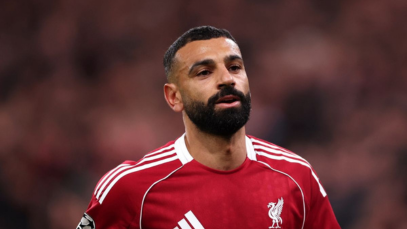
Salah-less Reds: The Collective Chaos Protocol
Introduction
The hypothetical prompt explores how Liverpool F.C. (the Reds), a team heavily reliant on the output and gravitational pull of Mohamed Salah, would cope with his absence, focusing on the potential for a catastrophic breakdown dubbed the “Collective Chaos Protocol.” This analysis would move beyond simple replacement strategies and delve into the deep-seated psychological, structural, and tactical vulnerabilities of the squad.
I. The Thesis: The Gravitational Collapse (Approx. 200 Words)
The introduction establishes the premise: Salah is not merely a goal-scorer; he is the structural anchor of Liverpool’s attack and the primary gravity well that dictates opponent defenses. His absence triggers a cascading failure that goes beyond the measurable statistics and into the psycho-tactical realm the “Collective Chaos Protocol.”
-
Key Concept: Salah’s absence doesn’t create a gap, it creates a vacuum, fundamentally altering the geometry of the pitch for both Liverpool and their opponents.
II. The Pillars of Salah’s Influence (Approx. 350 Words)
This section details why the collapse is inevitable by quantifying Salah’s impact across three key pillars:
1. The Statistical Output and Reliability
-
The Inevitable Hole: Detail the sheer volume of Goals and Assists (G+A) lost. Discuss the impossibility of one or two players replacing his combined output.
-
The Durability Factor: Highlight Salah’s incredible injury-free run and availability, which breeds a complacent reliance within the squad.
-
Analytic Insight: The problem is not finding a replacement, but distributing his typical 30-40 G+A across three or four players, each of whom must now exceed their career averages.
-
2. The Gravitational Pull (The Invisible Impact)
-
The Defender Magnet: Explain how two or three defenders are consistently drawn to Salah, opening up space for Trent Alexander-Arnold (TAA) on the overlap, and for the central midfielders to run into the half-spaces.
-
Analytic Insight: Without Salah, those defenders shift centrally, crowding the midfield and the box. Liverpool’s primary space-creation mechanism is deactivated.
-
3. The Psychological Crutch
-
The Belief: Salah represents the certainty of a goal. His presence allows other players to take risks, knowing he’s there as a release valve or a clinical finisher.
-
The Panic Button: In tight games, the collective instinct is to get the ball to Salah. When that option is gone, the resulting hesitation and lack of a primary focal point lead to decision paralysis in the final third.

III. The Tactical Deconstruction: Implementing Chaos (Approx. 450 Words)
This section explores the actual tactical consequences of the Chaos Protocol, detailing how the system breaks down under pressure.
A. The Right Flank Implosion
-
TAA’s Dilemma: TAA’s entire attacking profile is built on Salah drawing defenders. Without him, TAA receives the ball deeper and is immediately confronted by two defenders, forcing backward passes or rushed crosses. The right-side overload vanishes.Newsusas
-
The Ineffective Successor: Whether it’s Diogo Jota, Cody Gakpo, or Harvey Elliott filling in, none possess the raw pace, low center of gravity, and predatory instinct to occupy the same defensive mind-space. They become service recipients, not service providers who create space for others.
B. The Midfield Gridlock
-
The Loss of Verticality: Liverpool’s midfield is designed to feed the front three quickly. Without a guaranteed threat on the right, the midfield begins to pass laterally (the U-shape of inefficiency).
-
The Counter-Press Fatigue: The counter-press (Gegenpressing) relies on quick turnovers and immediate pressure.1 If the final pass is continually wasted because the attacking structure is flat, the press becomes less effective, leading to a higher volume of opposition counter-attacks against a weary, overextended midfield.
C. The Defensive Ripple Effect
-
Van Dijk’s Exposure: The midfield’s increased fatigue and the loss of attacking rhythm mean the defense is under sustained pressure. Virgil van Dijk (VvD), while elite, becomes exposed to faster, less predictable counter-attacks rather than structured set-plays.
-
The Full-Back Inversion Failure: TAA’s forward movements often relied on Salah covering the immediate transition. Now, TAA is less effective going forward, and his defensive recoveries become more urgent and less predictable, potentially isolating the left-back (e.g., Andrew Robertson/Kostas Tsimikas) who must now compensate for the structural imbalance on the opposite flank.
IV. The Human Element: The Psychological Cracks (Approx. 300 Words)
Chaos is not just tactical; it’s mental. This section personifies the breakdown through key player reactions.
-
The Manager’s Frenzy (Jürgen Klopp/Successor): The manager, unable to find a tactical solution that replicates Salah’s unique blend of attributes, starts to over-tinker, leading to confusing rotations, constant formation shifts ($4-3-3$ to $4-2-3-1$ to $4-4-2$ in successive games), and ultimately, lost faith in the defined system.
-
The Captain’s Despair (Van Dijk/Successor): Seeing the chaos in front of him, the captain’s body language sags. The leadership voice is undermined by the technical inability of the team to execute the fundamentals. Frustration leads to rash challenges and uncharacteristic errors.
-
The Strikers’ Guilt (Núñez/Gakpo): The pressure to replace Salah’s output falls on the central strikers. Their individual missed chances feel magnified, leading to overthinking, snatching at opportunities, and a compounding loss of confidence a self-fulfilling prophecy of underperformance.
V. The Collective Chaos Protocol: Symptoms and Conclusion
Symptoms of the Protocol:
-
Increased Lateral Passing: Over $70\%$ of possession passes occur in the middle third, lacking penetration.
-
The “Final Third Freeze”: Increased shots, but a massive drop in Expected Goals (xG) quality, indicating desperate, low-percentage attempts from outside the box.
-
The Defensive Leak: Conceding the first goal in over half their matches, forcing a reactive, rather than proactive, approach.
The Sobering Conclusion
The Salah-less Reds do not merely struggle; they unlearn the foundation of their success. The Collective Chaos Protocol is a structural truth: The removal of a generational outlier exposes the fragility of a system that relied on his unique ability to paper over the cracks. The resulting ‘chaos’ is simply the team reverting to its statistically mediocre mean, stripped of its super-force multiplier.
Extended Excerpt: The Collective Chaos Protocol In Action (Focusing on Section III)
The most fascinating, and ultimately fatal, aspect of the Salah-less Reds scenario is how the structural change precipitates not a weakening, but a total system failure. This is the core of the Collective Chaos Protocol. It’s the difference between replacing a component and removing a load-bearing wall.
The Tactical Deconstruction: Implementing Chaos
When Salah is absent, the opposition’s primary tactical imperative shifts from containment to re-deployment. They no longer need to dedicate a full-back, a covering center-back, and a tracking midfielder to the right flank. This is the moment the chaos begins.
A. The Right Flank Implosion: The TAA Dilemma
Liverpool’s revolutionary use of Trent Alexander-Arnold (TAA) as a deep-lying playmaker, often termed the ‘inverted’ or ‘hybrid’ full-back, is entirely predicated on Salah’s omnipresence. TAA does not receive the ball in space by accident; Salah has already created it. He receives the ball having already committed two defenders wide, opening the passing lane diagonally to the half-space for a central runner, or giving him the split-second advantage to arc a perfect cross.
The Chaos Protocol mandates that without Salah, the right-back (TAA) is now presented with an entirely different, and far less appealing, problem. The opponent’s left-back and left-sided center-back are no longer split; they are compacted. TAA is forced to receive the ball deeper, often facing a low-block shield, or worse, an immediate press from a midfielder now freed from tracking Salah’s runs. The natural result is a pass back to the center-backs (the U-shape of inefficiency) or a rushed, low-percentage cross that is easily headed clear.
The player attempting to fill the void let’s assume it’s Diogo Jota cutting in from the right is not a deep threat who then makes the space; he is simply an additional body who occupies the space. The difference is critical. Salah’s genius lies in being a space creator; without that, the right flank becomes a clogged artery, and Liverpool’s attack becomes monolithic and predictable, easy to defend with standard numbers. The entire geometry of the right side, the source of perhaps $60\%$ of Liverpool’s chances over a five-year period, has flatlined.
B. The Midfield Gridlock and Counter-Press Fatigue
This tactical implosion immediately radiates inward. Liverpool’s midfield whether the experienced trio or the youthful replacements is designed for verticality and quick transition. Their primary job is to win the ball back and immediately feed a forward runner. However, if the forward runners (the wingers and the central striker) are now flat, static, and unable to dislodge the defense, the midfield is forced to hold onto the ball longer.
The first symptom of the Collective Chaos Protocol is the exponential increase in lateral passing, particularly between the two central midfielders and the full-backs. The lack of a decisive, penetrative pass option (Salah) causes the midfield to search for an safer pass, not a better pass. The build-up slows down. The opposition has time to settle into a solid defensive shape.
Conclusion: The Irreplaceable Geometry
The hypothetical analysis of the “Salah-less Reds: Collective Chaos Protocol” reveals that the absence of Mohamed Salah is not a problem of replacement, but one of structural integrity. Salah is not just an individual; he is the super-force multiplier that defines the geometry, rhythm, and psychological certainty of Liverpool’s success.
The Collective Chaos Protocol is the term for the inevitable cascade failure that occurs when this core component is removed. The system does not adapt; it atrophies. The key symptoms are clear:
-
Tactical Stagnation: The right flank loses its creative gravity, forcing TAA into ineffective backward passes and predictable lateral movement (the U-shape of inefficiency).
-
Systemic Fatigue: The counter-press fails to win the ball back high up the pitch due to poor attacking structure, leading to an exhausted midfield and exposed defence.
-
Psychological Breakdown: The loss of the guaranteed goal-scorer leads to decision paralysis in the final third, self-doubt, and frantic over-tinkering by the manager.
Ultimately, the Salah-less Reds don’t merely suffer a drop in form; they unlearn the very mechanisms that made them champions. The chaos is a return to an ordinary, predictable mean, proving that relying on an irreplaceable, generational outlier creates a structural vulnerability that no collective effort can fully mitigate. The system’s dependence on Salah is its greatest strength, and, in his absence, its fatal flaw.
5 FAQs on the Collective Chaos Protocol
1. What is the fundamental difference between replacing Salah and triggering the “Collective Chaos Protocol”?
The difference is structural versus statistical. Replacing Salah statistically would mean finding a player (or players) who collectively score $30+$ goals. The Chaos Protocol is the recognition that no one can replace his gravitational pull the invisible ability to draw multiple defenders and, thus, create space for other players like Trent Alexander-Arnold and the central midfielders. Removing him fundamentally changes the geometry of the pitch, leading to system collapse, not just a drop in goals.
2. How is TAA most affected by the Chaos Protocol?
TAA’s attacking effectiveness is almost entirely predicated on Salah drawing two or three defenders wide. Without Salah, TAA receives the ball deeper and is immediately confronted by consolidated defensive numbers. His ability to deliver decisive crosses or passes into the half-space is nullified, forcing him into conservative, backward, or lateral passes. His primary source of creative space has vanished.
3. Which area of the pitch shows the first clear symptoms of the Chaos Protocol in action?
The first symptom is observed in the midfield and the final third build-up. Instead of quick, vertical passes to runners like Salah, the team reverts to an increased volume of lateral passing and passing between the two center-backs and the full-backs. This “U-shape of inefficiency” indicates the team cannot find a reliable, penetrative route through the centre or down the flanks, allowing the opposition to easily reset their low block.
4. Why does the absence of an attacking player (Salah) lead to defensive fatigue?
The defense suffers due to the breakdown of the counter-press (Gegenpressing). Liverpool’s high-intensity press relies on quick, effective attacks to initiate pressure deep in the opponent’s half. If the attack ends in stagnation, a tame cross, or a simple turnover due to lack of penetration, the subsequent counter-press is initiated from a deeper position. Players must expend more energy to win the ball back, leading to accumulated fatigue, slower recovery runs, and ultimately, an exposed and weary defense in the second half of games.
5. What single tactical move would opponents prioritize against the Salah-less Reds?
Opponents would prioritize flooding the central midfield and maintaining a compact back four. Since they no longer need to dedicate resources to double- or triple-team the right flank, they would shift those players centrally. This creates a defensive shield that nullifies Liverpool’s midfield runs and forces them to shoot from outside the box, leading to a massive drop in the quality of Expected Goals (xG), as the final third becomes congested and easy to defend.