


Gabriel Jesus on 11-Month Injury Struggle & Comeback
Introduction: A Journey of Strength, Setbacks, and Redemption
Gabriel Jesus’ 11-month injury saga is more than just another football story it’s a deeply human journey filled with doubt, grit, pain, and the burning desire to return stronger than ever. When an athlete of his caliber goes down, the world usually focuses on the physical damage. But what unfolds behind the scenes the sleepless nights, the lonely rehab routines, the fear of losing relevance is often far more intense than what fans see on TV. That’s what makes Gabriel’s return powerful: it isn’t simply a comeback; it’s a statement about resilience.
For nearly a year, the Brazilian forward was forced to watch the game he loves from the sidelines. He witnessed Arsenal battle through a demanding season. He saw Brazil reshape its attack without him. And every moment felt like a reminder of what he was missing. Yet, he kept going. Not because it was easy, but because it was necessary. Injuries can break bodies, but long layoffs can break spirits and that’s the part Gabriel Jesus refused to surrender.
Throughout those difficult months, he opened up about his fears, the moments when doubt crept in, and the determination that slowly rebuilt him piece by piece. What makes his story relatable isn’t the football it’s the fight. Anyone who has ever faced a setback knows that progress doesn’t come in straight lines. Some days you feel unstoppable; others, you wonder if you’ll ever get back to who you used to be. Gabriel lived every one of those days.
This article dives deep into that 11-month battle: the injury that changed everything, the emotional storms that followed, the rigorous rehab routine, and the huge wave of relief and joy when he finally stepped back onto the pitch. His comeback isn’t just a sporting milestone it’s a reminder that even in the darkest stretches, hope has a way of breaking through.
Who Is Gabriel Jesus? A Quick Look at His Football Rise
Gabriel Jesus’ journey to becoming one of the most recognized forwards in world football didn’t begin in a polished academy or a high-profile football city it started on the streets of São Paulo, where talent grows from grit. Like many Brazilian stars before him, Gabriel’s earliest football memories weren’t inside stadiums but on dusty, uneven pitches where kids played barefoot, driven only by heart and hunger. What set him apart wasn’t just skill; it was intensity. Even as a young teenager, he treated every match like a final, every touch like it mattered. And that mentality carried him far.
His professional rise truly kicked off at Palmeiras, a club that instantly recognized his unusual blend of speed, intelligence, and creativity. Within a short span, he transformed from a promising youngster into one of Brazil’s most exciting forwards. He helped Palmeiras secure the Brazilian league title, and his fearless style earned him comparisons to legends long before he had the chance to prove himself on the world stage. When Europe called, it was Manchester City guided by Pep Guardiola who saw his potential and moved quickly. The transition was challenging, but Gabriel adapted faster than expected.
Under Guardiola, he sharpened not just his finishing but also his tactical understanding. He learned when to press, when to drift wide, and how to disrupt defenses with ruthless precision. His unselfish playing style and relentless work ethic made him a versatile asset someone who could score, assist, and even defend from the front. Fans admired his honesty on the pitch; he played like a man who knew what it took to climb from nothing to global recognition.
Later, his move to Arsenal marked a new chapter: a chance to lead the attack, to become not just a supporting piece but a central figure. Arsenal valued not only his talent but his mentality his hunger to win, his passion, and the emotional spark he brings every time he steps onto the field. That’s why his injury was such a blow. Losing a player like Gabriel Jesus meant losing more than goals; it meant losing energy, character, and a heartbeat.
And that makes his comeback story even more meaningful.
The Injury That Changed Everything
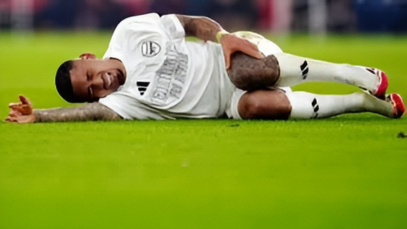
Gabriel Jesus’ injury wasn’t just another unfortunate moment in a footballer’s career it was a turning point, one of those events that slices a timeline into “before” and “after.” What initially looked like a manageable knock quickly spiraled into something far more severe, affecting not only his physical condition but his confidence, rhythm, and place within the team. The injury occurred during a high-intensity match where every challenge mattered, every duel felt decisive. As he landed awkwardly after a contested ball, there was a split second of silence before discomfort shot through his knee. Players know their bodies better than anyone, and Gabriel instantly sensed that something wasn’t right.
Medical staff rushed in. He tried standing. He tried walking. But that familiar sharp ache the kind that warns you this isn’t temporary made it clear that pushing through would only make it worse. When he was taken off, supporters hoped for the best. But deep down, uncertainties began to swirl. Would he be out for a few weeks? A few months? The real answer came only after detailed scans confirmed significant knee damage that required not just treatment, but surgery. For an explosive player whose game relies heavily on agility, acceleration, and quick directional changes, this was devastating news.
The diagnosis hit everyone hard. Arsenal saw one of their key forwards suddenly sidelined. Brazil lost one of their trusted attackers for an unknown stretch. And Gabriel himself was thrust into a fight he didn’t choose a battle against time, pain, and doubt. The emotional toll of that moment wasn’t about the injury alone, but about the ripple effect it created: the games he would miss, the opportunities slipping away, and the fear that returning to his best form wouldn’t be as guaranteed as everyone hoped.
That moment marked the start of an 11-month journey one that tested every ounce of perseverance he had. The injury didn’t just bench him; it reshaped his mindset, forced him to dig into reserves of strength he never knew he had, and set the stage for a comeback story that would inspire countless fans.
The 11-Month Battle: More Than Physical Pain
An 11-month injury layoff isn’t just a physical recovery timeline it’s an emotional marathon. For Gabriel Jesus, those months felt like a blur of frustration, slow progress, unexpected setbacks, and moments where giving up seemed easier than pushing forward. People often see the highlight reels, the goals, the celebrations, and the victories, but what they don’t witness are the long, lonely months inside rehab rooms where players battle silently with their deepest fears. For Gabriel, this battle became as much about mental survival as it was about healing his knee.
One of the toughest parts of a prolonged injury is the sudden shift from routine. Footballers are creatures of habit they train daily, play weekly, travel constantly, and live in a rhythm defined by the game. When that rhythm stops, life becomes strangely quiet. Gabriel has spoken openly about waking up some mornings and feeling lost, unsure of what the day would bring besides pain, physiotherapy, and isolation from the team environment he loved. Watching teammates train while you sit on the side lines can chip away at even the strongest mindset.
Media pressure didn’t help either. Pundits questioned whether he would return with the same explosiveness. Fans debated his long-term impact. And somewhere in between those voices, Gabriel battled his own fears fears of not being fast enough, sharp enough, or confident enough when the comeback finally arrived. Every athlete knows that the physical wound eventually heals, but the mental scars? Those take longer. Gabriel’s inner monologue during this period was filled with questions like, “Will I be the same player again?” and “What if this injury changes everything?”
At the same time, he drew strength from unexpected places: family visits, messages from supporters, short chats with teammates who checked in on him regularly. His mother, known for her steady voice and emotional grounding, reminded him constantly that setbacks are part of life, not the end of a story. Those reminders kept him anchored when rehab became repetitive and discouraging.
This period forced Gabriel Jesus to grow not as a striker, but as a person. The 11 months weren’t just about waiting to return; they were about rebuilding trust in his body, mastering patience, and learning resilience in its rawest form. When he finally stepped back onto the pitch, he wasn’t just healed he was wiser, mentally tougher, and more grateful for every moment he got to play again.
Inside the Rehab Room: Day-to-Day Recovery Stories
Rehabilitation isn’t glamorous. It doesn’t come with cheering crowds, stadium lights, or highlight moments that trend on social media. It’s slow. It’s repetitive. It’s mentally draining. And for Gabriel Jesus, those long months inside the rehab room were some of the most defining of his entire career. This was where he confronted the limits of his physical strength and the edges of his emotional resilience. Every day carried its own battle, and every tiny improvement felt like a small victory in a war far bigger than a football match.Newsusas
A typical rehab day for Gabriel began early, sometimes before sunrise. The first step was always assessment how much swelling did he have? Was the joint moving better than yesterday? Was the pain sharper, duller, or finally fading? These questions weren’t just medical they determined the entire direction of his training that day. Some mornings brought progress, where flexibility improved and strength returned. Other mornings brought setbacks, where stiffness or sharp pain meant scaling everything back. Those were the hardest days, when it felt like he was taking one step forward and two steps back.
Physiotherapy formed the core of his recovery. It involved exercises that seem small to the outside world lifting a leg at a specific angle, engaging muscles people rarely think about, or balancing on one leg with eyes closed. But those tiny movements were crucial building blocks. They strengthened the supporting muscles around his knee, restored stability, and slowly rebuilt the explosiveness required for a forward who relies on sprinting, cutting, and accelerating in tight spaces. And while they looked simple, they were anything but. Many sessions left him exhausted, drenched in sweat, and mentally drained.
Alongside this physical grind came emotional highs and lows. Being separated from the squad for so long made him feel disconnected at times. While his teammates trained, strategized, and competed, Gabriel spent hours in a quiet room focused solely on recovery. It’s a lonely process, and he has admitted that the solitude occasionally became overwhelming. That silence gave him too much time to think about his place in the team, the opportunities slipping away, and whether his body would truly return to its peak.
Yet, there were glimmers of hope along the way. The medical staff encouraged him relentlessly, celebrating even the smallest improvements. Teammates visited regularly, some offering jokes, others offering genuine emotional support. His family played an even bigger role calling daily, reminding him why he started, and pushing him to keep trusting the process. These interactions kept him anchored, reminding him that he wasn’t fighting this battle alone.
The rehab room became a place of transformation. It tested his patience, sharpened his discipline, and taught him to appreciate things he once took for granted like running without pain or striking a ball cleanly. By the time he approached the final stages of recovery, he wasn’t just physically ready; he was mentally rewired for the comeback that was waiting just ahead.
Gabriel Jesus Speaks Out: His Own Words on the Struggle
One of the most powerful parts of Gabriel Jesus’ 11-month injury journey is how openly he spoke about the emotional and mental challenges he faced. Many footballers stay silent, offering only generic statements like “I’ll come back stronger.” But Gabriel chose honesty. He didn’t hide the vulnerability, the fear, the doubt, or the exhaustion. He let the world see the human behind the athlete and his words resonated with thousands of fans who saw reflections of their own struggles in his.
In interviews and social media posts, Gabriel admitted that some days felt unbearable. “There were mornings I woke up and didn’t want to go to rehab,” he confessed. “Not because I was lazy, but because I was scared the pain would still be there.” That kind of transparency isn’t common among top-level players, who often feel pressure to appear invincible. Yet Gabriel embraced the truth. He talked about the psychological battle the fear of losing his explosiveness, of being replaced, of becoming a “what-if” story instead of a success.
One moment he frequently mentioned was the emotional shock of watching his team play without him. It hurt not out of jealousy, but because football is his identity. “You don’t realize how much the game is part of you until it’s taken away,” he said. When Arsenal went through tough patches, he wished he could help. When they played brilliantly, he wondered whether he would still fit into the system once he returned. Those thoughts can eat away at an athlete’s confidence, but Gabriel refused to let them break him.
He also revealed that there were days he nearly gave up, especially during the mid-recovery phase when progress stalls. “You do everything right, and still the pain comes back. That’s the moment you question everything.” But what kept him going was his childhood memory of playing barefoot in São Paulo streets. Back then, football wasn’t a job it was joy. That reminder rekindled his motivation whenever the journey felt overwhelming.
His gratitude was equally apparent. He praised the medical team, describing them as “the real heroes” behind his comeback. He thanked teammates for their calls, messages, and small gestures that kept him connected. Most importantly, he highlighted his family particularly his mother for anchoring him through the worst days. “When I wanted to cry, she told me to cry. When I wanted to fight, she told me to fight.”
These words didn’t just reflect pain they reflected evolution. Gabriel Jesus’ honesty turned his rehab story into something bigger than football. It became a reminder that even elite athletes break, doubt, cry, and start over. And in that honesty, he found strength not just for himself, but for everyone watching.
The Future of Gabriel Jesus: What’s Next?
Gabriel Jesus’ return from an 11-month injury wasn’t just a comeback it was the start of a new chapter. Now that he’s back on the pitch, the biggest question is: what does the future look like for him? After such a long layoff, players often redefine their priorities, adjust their approach to the game, and set new long-term goals. For Gabriel, this moment is a chance not only to regain his form but to evolve into an even smarter, more complete player.
Long-Term Goals
Gabriel has always been clear about his ambitions: he wants to win major trophies, perform consistently at the highest level, and cement his legacy as one of Brazil’s most impactful forwards of his generation. Post-injury, his long-term goals revolve around stability maintaining fitness, managing his body better, and performing with maturity rather than relying purely on explosiveness.
He aims to refine aspects of his game that require intelligence over intensity: decision-making, link-up play, movement off the ball, and leadership. These are qualities that age well, making his future potentially even brighter than his early years.
Chances of Reclaiming His Starting Position
At Arsenal, competition for attacking roles is fierce. But Gabriel’s versatility gives him a natural advantage. He isn’t limited to one role he can thrive as a central striker, a wide forward, or a pressing specialist. His chances of reclaiming a consistent starting spot depend on two key factors:
-
Consistency:
If he can deliver steady performances game after game, Mikel Arteta will find it impossible to leave him out. -
Fitness Management:
Staying injury-free is now a top priority. Arsenal’s medical team is prepared to monitor his workload more carefully than ever.
His influence in the dressing room and experience in big matches also make him a valuable leader a role that could help secure his place in the starting XI.
His Ambitions for Club and Country
For Arsenal, Gabriel wants to be at the center of a trophy-winning project. The Premier League title remains a dream he’s eager to chase again. In Europe, he’s hungry to make a bigger impact in the Champions League, a stage where he believes he has unfinished business.
For Brazil, he aims to re-establish himself as a key figure in the national setup. Competition is heavy, but Gabriel’s adaptability and experience give him a strong chance to reclaim a regular spot especially as Brazil rebuilds a new generation of attackers.
Lessons Athletes Can Learn From Gabriel Jesus’ Comeback
Gabriel Jesus’ 11-month injury journey is more than an inspiring football story it’s a powerful blueprint for athletes facing their own setbacks. His experience reveals lessons that go far beyond the pitch, offering valuable guidance on resilience, recovery, and mental strength. Whether you’re a professional athlete, a weekend competitor, or someone battling personal obstacles, his journey teaches principles that apply to every challenge.
Resilience
One of the standout lessons from Gabriel’s comeback is the value of resilience not the glamorous, motivational-speaker type, but the raw, everyday kind. Resilience isn’t about pretending to be strong; it’s about continuing even when you feel weak. Gabriel had days where he felt broken, frustrated, or mentally overwhelmed. Yet he showed up, again and again, trusting that the small steps would eventually lead to big progress.
His resilience came from:
-
Accepting that setbacks were part of the process
-
Staying committed even when improvement was hard to see
-
Leaning on support rather than isolating himself
-
Keeping his goals in sight, even on difficult days
For athletes, resilience isn’t optional it’s essential.
Injury Management
Gabriel’s journey highlights the importance of treating injuries with respect, patience, and strategic care. Many athletes rush their recovery, eager to return before they’re truly ready. Gabriel learned the hard way that healing can’t be forced it must be guided.Financialeage
Key injury management lessons include:
-
Listening to medical experts, not ego
-
Understanding the difference between “discomfort” and “damage”
-
Prioritizing long-term fitness over short-term returns
-
Performing rehab consistently, not aggressively
-
Accepting that recovery may include setbacks
His patience ensured that when he returned, he came back properly not broken, not hesitant, but genuinely ready.
Mental Health Importance
Gabriel Jesus spoke openly about the mental struggles he faced loneliness, doubt, fear, and emotional fatigue. His willingness to address the psychological toll of injury sends a strong message: mental health is just as important as physical recovery.
He taught athletes that:
-
It’s okay to feel lost or frustrated
-
Seeking emotional support is a strength, not a weakness
-
Talking about mental struggles reduces their power
-
A healthy mindset accelerates physical recovery
-
Resting mentally is as important as resting physically
Gabriel’s honesty removes the stigma around mental health in sports and shows that emotional resilience is a crucial part of an athlete’s toolkit.
Conclusion: A Story of Courage and Revival
Gabriel Jesus’ 11-month injury journey is more than a chapter in his football career it is a powerful reminder of what true perseverance looks like. What he endured wasn’t just a physical setback; it was a test of patience, identity, discipline, and emotional strength. He went from the highest of highs playing at the top level for club and country to the lonely, exhausting grind of rehab rooms and self-doubt. Yet through every setback, he refused to let the injury define him.
His comeback isn’t simply about returning to the field; it’s about returning transformed. Gabriel learned how to trust his body again, how to silence the internal noise of fear, and how to appreciate the game in a deeper, more meaningful way. When he stepped back onto the pitch after nearly a year away, it wasn’t just a player returning it was a person reborn.
For fans, his journey rekindled hope. For teammates, it restored a vital spark. For young athletes watching from afar, it became a blueprint of resilience. And for Gabriel himself, it proved that his story is far from over. His future now carries a new edge a sharper mindset, a stronger heart, and a clearer purpose.
No matter what comes next trophies, national team glory, or unexpected challenges Gabriel Jesus has already shown the world that he possesses something unshakeable: the ability to rise, rebuild, and return stronger. His story is a celebration of courage, vulnerability, and relentless determination. And as he continues writing the next chapters of his career, fans everywhere will remember this period not as the moment he fell, but as the moment he rose higher than ever before.
FAQs
1. How long was Gabriel Jesus out due to injury?
He missed nearly 11 months of football, making it one of the longest and most challenging injury periods of his career.
2. What type of injury did Gabriel Jesus suffer?
He suffered a serious knee injury that required surgery, extensive physiotherapy, and long-term rehabilitation.
3. Did Gabriel Jesus speak openly about his mental struggles during recovery?
Yes. He was honest about facing fear, frustration, and emotional exhaustion, highlighting the importance of mental health for athletes.
4. Will Gabriel Jesus reclaim his starting position at Arsenal?
He has a strong chance due to his versatility, work ethic, and experience, but it will depend on his consistency and fitness.
5. What can young athletes learn from Gabriel Jesus’ comeback?
They can learn the importance of resilience, proper injury management, mental health awareness, and staying patient during setbacks.