


Donald Trump Net Worth 2026: Biography, Wealth, Business Empire, and Financial Journey
Introduction
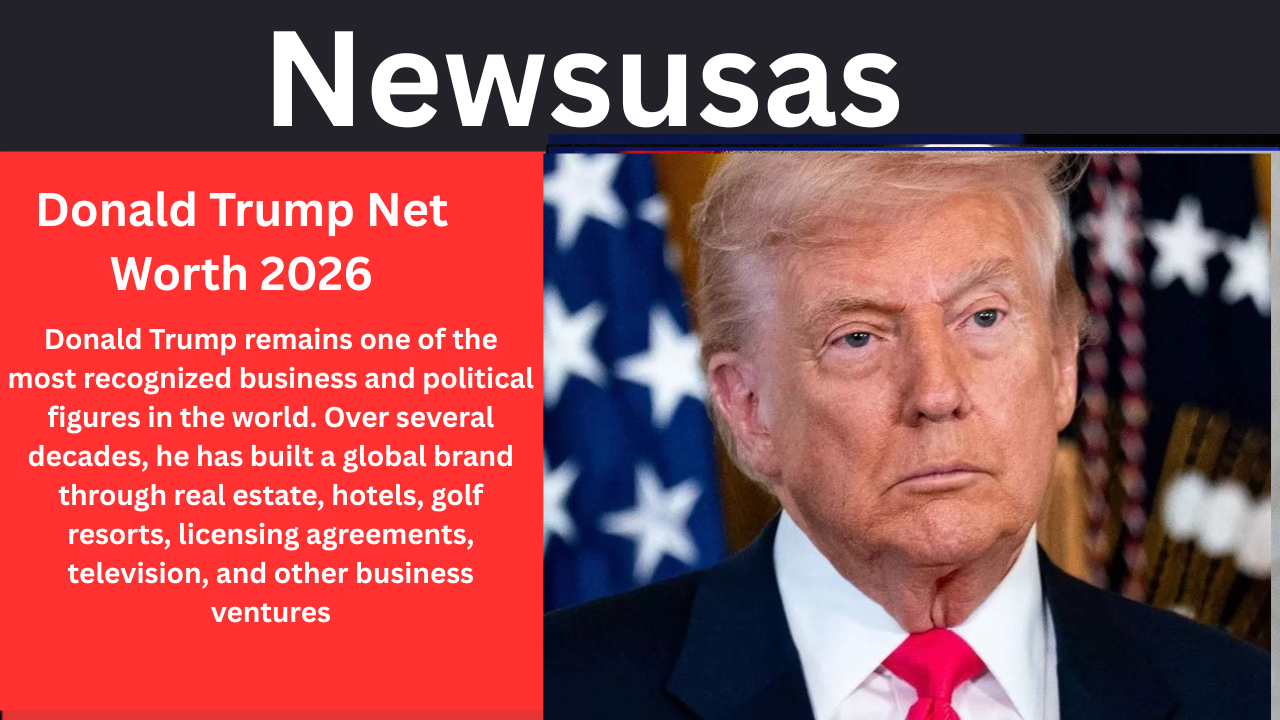
Donald Trump remains one of the most recognized business and political figures in the world. Over several decades, he has built a global brand through real estate, hotels, golf resorts, licensing agreements, television, and other business ventures. His financial journey has included periods of rapid growth, legal challenges, market fluctuations, and changing business strategies.
As of 2026, Trump’s estimated net worth continues to attract attention from investors, journalists, economists, and the general public. Because many of his assets are privately held and real estate values change over time, different organizations publish different estimates. Nevertheless, independent financial publications generally place his wealth in the multi-billion-dollar range.
This article explores Donald Trump’s estimated net worth in 2026, how he accumulated his fortune, his major assets, income sources, business ventures, investments, and the factors that influence his overall wealth.
Donald Trump Quick Biography
| Full Name | Donald John Trump |
|---|---|
| Date of Birth | June 14, 1946 |
| Birthplace | Queens, New York City, USA |
| Nationality | American |
| Profession | Businessman, Investor, Media Personality, Politician |
| Education | Wharton School, University of Pennsylvania |
| Political Party | Republican |
| Children | 5 |
| Estimated Net Worth (2026) | Approximately $6–7 Billion (varies by source) |
Donald Trump Net Worth in 2026
Financial analysts estimate Donald Trump’s net worth in 2026 to be approximately $6.5 billion, although exact figures differ depending on the valuation of his businesses and investments.
Unlike billionaires whose wealth is largely tied to publicly traded stocks, Trump’s fortune is primarily connected to:
- Commercial real estate
- Luxury hotels
- Golf clubs
- Residential properties
- Brand licensing
- Media investments
- Private businesses
- Equity holdings
- New digital business ventures
Because many of these assets do not have publicly traded market prices, experts use estimated property values, company earnings, debt obligations, and comparable market sales to calculate his wealth.
Why Net Worth Estimates Differ
Many readers wonder why different websites report different net worth figures.
The answer is simple.
Most of Donald Trump’s assets are privately owned. Unlike publicly traded companies where stock prices are visible every day, private real estate and businesses require valuation estimates.
Several factors influence these estimates:
- Changes in commercial real estate prices
- Hotel occupancy rates
- Golf club revenues
- Property appreciation
- Business debt
- Market conditions
- Investment performance
- Brand licensing income
As these values fluctuate throughout the year, estimated net worth also changes.
Early Life
Donald John Trump was born in Queens, New York, in 1946.
His father, Fred Trump, was a successful real estate developer specializing in residential housing throughout New York City. Growing up in a business-oriented family exposed Donald Trump to construction, property management, and investment from an early age.
During his teenage years, he attended the New York Military Academy, where he developed leadership skills and discipline.
Afterward, he enrolled at the Wharton School of the University of Pennsylvania, one of the leading business schools in the United States, earning a degree in economics.
This educational background later helped him expand the family business into larger commercial projects.
Beginning His Business Career
Donald Trump officially joined his father’s real estate company in the early 1970s.
Rather than focusing only on middle-income housing developments, he pursued larger commercial opportunities in Manhattan.
His vision included:
- Luxury office buildings
- Hotels
- Skyscrapers
- High-end residential developments
- Entertainment properties
These ambitious projects helped establish his public image as a major real estate developer.
Expansion into Manhattan
During the late 1970s and 1980s, Trump invested heavily in Manhattan real estate.
Some of his most recognized developments included luxury buildings, office towers, and high-profile renovation projects.
His strategy involved:
- Purchasing undervalued properties
- Renovating older buildings
- Negotiating tax incentives
- Attracting luxury tenants
- Increasing long-term property value
These investments significantly increased both his business reputation and personal wealth.
Building the Trump Brand
One of Donald Trump’s biggest achievements was transforming his surname into a globally recognized business brand.
Instead of relying only on property ownership, he expanded into licensing agreements that allowed developers and businesses to use the Trump name in exchange for fees.
Over time, the Trump brand appeared on:
- Hotels
- Residential towers
- Golf clubs
- Clothing
- Watches
- Books
- Educational products
- International developments
Brand licensing became an additional source of revenue beyond traditional real estate.
Television Success
Donald Trump’s popularity increased dramatically after hosting the television show The Apprentice.
The program became one of America’s most successful business reality shows.
Its success provided multiple financial benefits:
- Television salary
- Advertising partnerships
- Speaking engagements
- Increased brand recognition
- Book sales
- Licensing opportunities
The television exposure introduced the Trump brand to millions of viewers worldwide.
Real Estate Remains the Foundation of His Wealth
Although Donald Trump has expanded into many industries, real estate continues to represent the largest portion of his wealth.
His portfolio includes:
- Office towers
- Luxury apartments
- Hotels
- Resorts
- Golf courses
- Commercial buildings
- Residential developments
- Land holdings
Real estate provides both long-term appreciation and recurring income through leases and operations.
Luxury Hotels
Trump-branded hotels have operated in several cities around the world.
Luxury hotels generate revenue through:
- Room bookings
- Restaurants
- Conferences
- Weddings
- Corporate events
- Spa services
- Hospitality partnerships
Hotel performance depends on tourism trends, business travel, and overall economic conditions.
Golf Clubs and Resorts
Golf properties represent another significant part of Trump’s business empire.
His portfolio includes golf courses and private clubs in multiple countries.
Revenue comes from:
- Membership fees
- Green fees
- Tournament hosting
- Restaurants
- Event rentals
- Weddings
- Luxury accommodations
These businesses contribute both income and long-term property appreciation.
Commercial Office Buildings
Commercial real estate has historically been one of Trump’s largest investments.
Office towers generate rental income from:
- Corporate tenants
- Financial institutions
- Retail businesses
- Restaurants
- Professional offices
Rental agreements often provide stable cash flow over many years.
Residential Properties
Luxury condominiums and residential developments remain another important part of Trump’s portfolio.
Income may come from:
- Property sales
- Rental income
- Management fees
- Licensing agreements
Luxury real estate often appreciates over time, increasing overall net worth.
Licensing Business
Unlike owning every building bearing his name, Trump has often licensed his brand to independent developers.
This business model allows him to earn royalties without directly financing construction projects.
Licensing income generally involves:
- Brand usage fees
- Marketing partnerships
- Consulting agreements
- Management contracts
This approach requires less capital than purchasing new properties outright.
Books and Publications
Donald Trump has written and co-authored several books on business, leadership, and personal success.
Book sales continue generating royalties years after publication.
Popular topics include:
- Entrepreneurship
- Investing
- Negotiation
- Leadership
- Business strategies
- Personal branding
These publications have contributed both financially and to his public image.
Speaking Engagements
Over the years, Trump has participated in conferences, business events, and public appearances.
These engagements have provided additional income through:
- Speaking fees
- Event partnerships
- Promotional activities
- Media interviews
Public appearances also help maintain brand visibility.
Donald Trump Business Empire and Sources of Income
Donald Trump’s wealth has been built through multiple income streams rather than relying on a single business. While real estate remains the cornerstone of his fortune, his portfolio has expanded over the years to include hospitality, golf resorts, licensing, media, publishing, investments, and digital ventures. Diversifying his businesses has helped reduce reliance on any one industry.
The Trump Organization
The Trump Organization is the umbrella company that oversees many of Trump’s business interests. It manages a wide range of assets and operations, including:
- Commercial office buildings
- Residential developments
- Luxury hotels
- Golf clubs and resorts
- Property management
- Brand licensing
- Hospitality services
Rather than focusing on one market, the organization operates across several sectors, creating multiple revenue sources.
Real Estate Portfolio
Real estate continues to represent the largest share of Donald Trump’s wealth. His holdings include:
Office Buildings
Commercial office buildings generate recurring income through long-term leases with businesses and professional tenants.
Residential Towers
Luxury apartments and condominiums provide revenue from property sales, rentals, and management fees.
Hotels
High-end hotels earn income through:
- Room reservations
- Restaurants
- Conference facilities
- Weddings
- Luxury events
- Business meetings
Mixed-Use Developments
Many Trump properties combine residential, office, retail, and hospitality spaces, creating diversified cash flow from a single development.
Golf Clubs and Resorts
Trump owns or operates numerous golf properties. These facilities generate revenue from:
- Membership fees
- Daily golf rounds
- Corporate tournaments
- Weddings
- Private events
- Restaurants
- Luxury accommodations
- Merchandise sales
Because golf clubs often occupy valuable land, they also contribute significantly to long-term asset appreciation.
Brand Licensing
One of Trump’s most successful business strategies has been licensing his name rather than owning every project.
Through licensing agreements, developers pay to use the Trump brand on qualifying properties. Revenue may come from:
- Initial licensing fees
- Ongoing royalty payments
- Brand management contracts
- Consulting services
This model allows income generation with lower capital investment.
Hospitality Industry
Beyond property ownership, hospitality remains a major business segment.
Revenue is generated through:
- Hotel operations
- Fine dining restaurants
- Conference centers
- Event hosting
- Luxury guest services
The hospitality sector benefits from tourism, corporate travel, and special events, although it can also be affected by broader economic conditions.
Media and Entertainment
Donald Trump significantly increased his public profile through television.
His role as host of The Apprentice enhanced his personal brand and created opportunities such as:
- Television compensation
- Advertising partnerships
- Sponsorship deals
- Media appearances
- Increased book sales
Strong media visibility also boosted the value of the Trump brand.
Publishing and Book Royalties
Trump has authored or co-authored several business books.
These publications continue to generate royalty income and include topics such as:
- Business leadership
- Entrepreneurship
- Negotiation
- Investing
- Personal branding
Book sales also reinforce his public image as a businessman.
Speaking Engagements
Over the years, Trump has participated in:
- Business conferences
- Leadership forums
- Political events
- Private functions
Speaking engagements can provide additional income while helping maintain public visibility.
Merchandise and Consumer Products
The Trump brand has appeared on various consumer products over the years, including:
- Clothing
- Accessories
- Home products
- Collectibles
Depending on the agreement, income may come from licensing royalties rather than direct manufacturing.
Digital Business Ventures
In recent years, Trump has expanded into digital platforms and media-related ventures. These initiatives have attracted attention from investors and supporters, adding another potential source of revenue through equity ownership, advertising, subscriptions, and partnerships.
Investments
Like many high-net-worth individuals, Trump has held investments beyond his core businesses. These may include:
- Cash reserves
- Marketable securities
- Private investments
- Business interests
The composition and value of these investments can change over time based on market conditions.
Factors That Affect Trump’s Net Worth
Because much of Trump’s wealth is tied to privately held assets, his estimated net worth can fluctuate due to:
- Commercial real estate prices
- Hotel performance
- Tourism trends
- Interest rates
- Debt levels
- Property appreciation
- Brand licensing revenue
- Market sentiment
Different analysts may value the same assets differently, which explains why published estimates vary.
Annual Income Sources
Donald Trump’s yearly income is derived from several categories:
- Rental income from commercial properties
- Hotel and resort operations
- Golf club memberships and events
- Licensing royalties
- Book royalties
- Speaking engagements
- Media-related earnings
- Investment returns
The mix of these income sources can change from year to year depending on business performance and market conditions.
Business Strategy
A key element of Trump’s business strategy has been leveraging a recognizable brand across multiple industries. Rather than relying solely on direct ownership, he has often combined ownership with licensing and management agreements to expand the reach of the Trump name.
This diversified approach has allowed his business interests to span real estate, hospitality, media, and consumer branding.
Financial Milestones
Throughout his career, Trump has experienced periods of both growth and financial challenges. Major milestones include:
- Expansion into Manhattan real estate
- Development of luxury hotels and towers
- Growth of the Trump brand through licensing
- National recognition from television
- Continued investment in golf resorts and hospitality
- Entry into newer digital and media ventures
These milestones have played a significant role in shaping his overall financial position.
Looking Ahead
The future value of Donald Trump’s business empire will depend on factors such as:
- Real estate market performance
- Tourism and hospitality demand
- Success of licensing agreements
- Economic conditions
- Performance of newer business ventures
As with any large private business portfolio, estimates of his net worth are likely to continue evolving.