
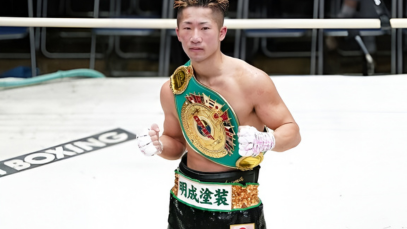
Takuma Inoue WBC Champion – Who Is Takuma Inoue?
Takuma Inoue isn’t just another name in the world of boxing he’s one of the brightest talents in Japan’s modern fighting scene and a symbol of technical brilliance in the ring. Born on December 26, 1995, in Zama, Kanagawa, Japan, Takuma grew up in a household where boxing wasn’t just a sport; it was a lifestyle. With his father, Shingo Inoue, serving as his coach, and his older brother, Naoya Inoue known worldwide as “The Monster” dominating multiple weight divisions, it’s no surprise that Takuma developed into a world-class fighter.
While many boxing fans first recognized him because of his famous brother, Takuma quickly proved that he stands on his own abilities. From a young age, he showed exceptional discipline, natural timing, and high-level ring IQ, which set him apart from most young fighters. Unlike many power punchers, Takuma’s early strengths were speed, precision, and clean technique. His approach is more strategic, relying on his ability to outthink and outmaneuver opponents rather than overwhelm them with sheer force.
Growing up in such a competitive environment shaped Takuma’s mindset. Watching Naoya train, win titles, and rise to international fame pushed him toward excellence yet without overshadowing him. Instead of trying to copy his brother’s style, Takuma sharpened his unique skills. Over the years, he built a reputation for being one of the most technically gifted Japanese fighters in the bantamweight division.
Takuma’s journey wasn’t a shortcut to glory. He experienced injuries, setbacks, and tough opponents, but each challenge strengthened him mentally and physically. His dedication ultimately led to his crowning achievement: becoming the WBC Bantamweight Champion, proving to the world that he is not just “Naoya’s brother,” but an elite champion in his own right.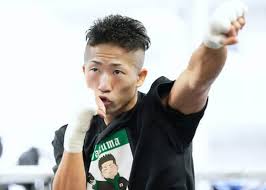
The Rise of a Japanese Boxing Star
Takuma Inoue’s rise to stardom didn’t happen overnight. Unlike many fighters who rely on natural power or brute force, Takuma built his foundation through technique, discipline, and years of consistent refinement. From his early teens, he was already competing at an elite level in Japan’s amateur circuit. Though his amateur career wasn’t extremely long, it was impressive enough to attract attention. He earned several regional titles and showcased the kind of precision and timing that would later define his professional career.
What made Takuma stand out wasn’t just skill but maturity. Even at a young age, he displayed the patience and tactical awareness of a seasoned fighter. Coaches often remarked on his high ring IQ the ability to read opponents, adjust mid-fight, and exploit weaknesses without taking unnecessary risks. These attributes would eventually become his trademarks in the professional ranks.
Takuma turned professional in 2013 under the guidance of his father and the Ohashi Boxing Gym, one of Japan’s premier boxing institutions. From the moment he debuted, expectations were sky-high. Yet instead of letting pressure break him, Takuma used it as fuel. His early fights were clean, composed performances that showed the world he wasn’t simply riding the coattails of his brother’s fame.
Within just a few years, Takuma had moved rapidly up the bantamweight ladder. He collected regional belts, defeated world-ranked contenders, and proved he belonged among the elite. Each win solidified his status as one of Japan’s top prospects, and by the mid-2010s, fans already believed he was destined to become a world champion.
Training Under the Inoue Legacy
Growing up in the Inoue household meant that boxing wasn’t just a sport it was a way of life. Takuma’s father, Shingo Inoue, played the dual role of parent and coach, shaping both Takuma and Naoya into world-class athletes. Under such guidance, Takuma developed early discipline and a respect for fundamentals, which would later define his signature fighting style. Unlike many young fighters who focus on power, Takuma was molded to master technique first. Every jab, every step, every defensive movement was taught with precision.
Training alongside his brother Naoya Inoue a fighter widely regarded as one of the greatest pound-for-pound champions in modern boxing added another level of intensity. But instead of being overshadowed, Takuma embraced the challenge. Watching Naoya’s success pushed him to develop his own identity as a boxer. While Naoya became famous for his explosive knockout power, Takuma leaned more toward intelligence and finesse. The contrast, in many ways, became Takuma’s strength.
Daily training in the Ohashi Gym fostered a competitive yet supportive environment. The gym is known for producing champions, and Takuma fit right in. Hard sparring, intense conditioning sessions, and advanced technical drills were part of his routine. Takuma often trained with fighters heavier than him, helping sharpen his defensive reflexes and footwork. His coaches frequently noted his exceptional ability to learn quickly and adapt, qualities necessary for surviving in the bantamweight division.
This unique blend of family influence, expert coaching, and exposure to elite talent made Takuma one of the most well-rounded boxers in Japan. It didn’t happen overnight years of repetition, failure, and adjustment shaped him into the disciplined champion he would eventually become.
Road to the WBC Championship
Takuma Inoue’s journey to the WBC Bantamweight Championship was filled with both triumph and adversity. He wasn’t a fighter who skyrocketed overnight. Instead, his path was marked by consistent wins, difficult opponents, and a few painful setbacks that tested his resilience. After establishing himself as a top prospect early in his career, Takuma began taking on higher-ranked fighters. His victories over seasoned opponents such as Mark Anthony Geraldo and Takuya Mizuno highlighted his ability to stay composed under pressure.Newsusas
One of the defining moments of his early career came in 2019, when he challenged Nordine Oubaali for the WBC Bantamweight title. Although Takuma showed incredible heart and technical skill, Oubaali’s strength and physicality became the deciding factors. Takuma suffered his first professional loss a moment that could have derailed a less determined fighter. Instead, it motivated him to train smarter, strengthen his weaknesses, and refine his technique even more.
After recovering and rebuilding, Takuma put together several strong performances to earn another shot at the WBC belt. His comeback wasn’t fueled by power or knockouts but by strategy, patience, and elite-level discipline. By the time he faced Liborio Solís for the vacant WBC Bantamweight Championship, Takuma was a more complete and mature fighter.
That fight a masterclass of speed, accuracy, and control marked the moment Takuma finally claimed the world title. Not just as Naoya’s younger brother, not as a prospect, but as a world champion in his own right.
Takuma Inoue vs. Liborio Solís – The Defining Match
The fight that officially crowned Takuma Inoue as the WBC Bantamweight Champion took place on April 8, 2023, against the dangerous and experienced Liborio Solís. Solís entered the ring with a tough reputation a rugged brawler with world championship experience and the kind of relentless pressure that could break many young fighters. But Takuma remained composed from the opening bell.
Throughout the fight, Takuma showcased why he is considered one of the most technically gifted fighters in the division. His jab was laser-sharp, constantly interrupting Solís’ forward momentum. Instead of engaging in risky exchanges, Takuma controlled the distance, using his footwork to pivot away from danger while selecting precise counterpunches.
Solís came forward relentlessly, throwing heavy hooks and attempting to bully Takuma against the ropes. But Takuma’s defensive intelligence stood out. He blocked, slipped, and rolled under punches with remarkable composure, conserving energy while making Solís miss a tactic that slowly drained the veteran’s confidence.
By the championship rounds, Takuma had full control of the fight. His accuracy improved as Solís began to slow down, and he continued landing clean combinations to secure a unanimous decision victory. When the final bell rang, there was no doubt: Takuma Inoue had earned his place among boxing’s elite.
This win wasn’t just a championship moment it was redemption, validation, and the arrival of a new force in the bantamweight division. 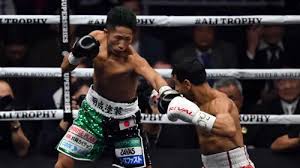
Takuma Inoue’s Fighting Style Explained
Takuma Inoue’s fighting style is a masterclass in precision and discipline. Unlike fighters who rely heavily on knockout power, Takuma’s game revolves around timing, speed, and strategy. He is the type of boxer who wins rounds through intelligence, gradually breaking down his opponent rather than seeking a quick finish.
One of Takuma’s biggest strengths is his jab. It is sharp, fast, and incredibly accurate. He uses it not only to score points but also to disrupt his opponent’s rhythm. You’ll notice that he often jabs while stepping to the side, creating angles that make counterattacks difficult. This is a technique many Japanese fighters use, but Takuma has perfected it to an art.
His footwork is another standout part of his game. Takuma is hardly ever stationary. Instead, he constantly pivots, slides, and circles around his opponent. This movement allows him to avoid unnecessary exchanges while keeping himself in the perfect position to land clean shots. Compared to Naoya, who often hunts for knockouts, Takuma prefers outboxing opponents with clean, surgical precision.
Defensively, Takuma is very sound. He uses a high guard when needed but also slips and rolls with punches extremely well. His ability to anticipate shots makes him hard to hit cleanly, even against aggressive opponents. Takuma’s training emphasizes defensive responsibility, which explains why he rarely takes significant damage during fights.
What makes his style especially effective is his composure. Even when pressured or faced with a strong opponent, he never panics. Instead, he adjusts his strategy, stays disciplined, and finds openings. Every punch he throws has purpose. Every movement is intentional. This combination of intelligence and technique makes him one of the most difficult fighters to prepare for in the bantamweight division.
Takuma Inoue’s Training Routine
If you’ve ever wondered how Takuma Inoue maintains such elite conditioning and precision, the answer lies in his intense, highly structured training routine. Takuma trains almost daily, and every session is designed with purpose. Early in the morning, he begins with roadwork long-distance running mixed with interval sprints to build both endurance and explosiveness. While many fighters see running as a chore, Takuma considers it one of the most important parts of his training.
After roadwork, he heads to the Ohashi Gym for technical drills. This includes shadowboxing, bag work, mitt sessions, and strategy training with his father and coaches. Unlike fighters who rely heavily on power training, Takuma’s sessions emphasize accuracy and timing. He spends hours practicing footwork patterns, perfecting punch angles, and rehearsing defensive slips.
Strength and conditioning also play a crucial role. Takuma performs a mix of weight training, plyometrics, and bodyweight exercises. These workouts are designed to improve muscle endurance, speed, and stability but not bulk. As a bantamweight fighter, maintaining the right weight while staying strong is essential, and Takuma has mastered that balance.
Sparring usually happens several times a week. Takuma often spars with fighters from higher weight classes to help him handle pressure and improve his defense. Coaches frequently praise his ability to stay calm even when facing heavier, stronger opponents.
Finally, recovery is a major part of Takuma’s routine. Ice baths, stretching, physiotherapy, and proper nutrition ensure that his body heals and stays in optimal condition. This disciplined lifestyle is a big reason why Takuma continues to perform at such a high level.
Impact on Japanese Boxing
Takuma Inoue’s rise to WBC Bantamweight Champion has had a significant impact on Japanese boxing, both culturally and competitively. Japan has always had a strong boxing tradition, but much of the global spotlight in recent years has focused on Naoya Inoue. With Takuma now a world champion, the narrative has expanded Japan is no longer seen as a one-star nation but a powerhouse producing multiple elite fighters at once.
Takuma’s success has inspired a new wave of young fighters who admire his disciplined style and technical approach. Not every boxer can punch with Naoya’s raw power, but many can relate to Takuma’s precision, strategy, and intelligence. Coaches across Japan often point to him as the example of what happens when a fighter masters the fundamentals. Because of this, more gyms are now emphasizing technique over aggression, especially for younger athletes.
Moreover, Takuma has helped elevate the popularity of lower weight classes. Japanese fans have long supported lighter divisions, but Takuma’s rise gives them a fresh hero to rally behind. His calm personality and humble approach resonate deeply with fans who appreciate fighters that embrace discipline and respect both inside and outside the ring.
Internationally, Takuma’s emergence adds depth to Japan’s reputation. Instead of being seen as Naoya’s little brother, he is now acknowledged as a world champion with a unique style. Global broadcasters, analysts, and promoters praise him as part of Japan’s “Inoue Era” a generation where Japanese boxers consistently sit at the top of the sport.
His win also encourages major boxing organizations to host more events in Japan. With fighters like Takuma drawing huge crowds, Tokyo and Yokohama have become major destinations for world championship fights. This boosts the national boxing economy and gives local fighters more opportunities to compete on big stages.
In short, Takuma’s championship win didn’t just elevate his own career it elevated Japanese boxing as a whole.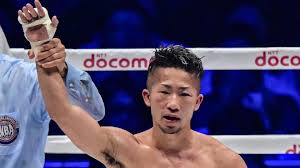
Future Predictions for Takuma Inoue
Predicting Takuma Inoue’s future in the bantamweight division is exciting, because his style and discipline suggest he has many successful years ahead. At only 20s, he is entering the prime of his athletic career with more experience, improved conditioning, and a growing sense of confidence. Many analysts believe he has the potential to unify the division, especially with his strong technical base and consistent improvement.
One of the biggest potential matchups fans want to see is Takuma facing the current rising stars in the bantamweight and super bantamweight divisions. Whether he stays at bantamweight or eventually moves up depends on how his body continues to develop. Given his technical style, a jump in weight may actually suit him well, allowing him to maintain speed while adding a bit more strength.
Unification fights are also on the horizon. As WBC champion, Takuma could pursue matches against the WBA, IBF, or WBO titleholders. These types of fights not only raise his legacy but also bring significant financial rewards and global recognition. The Inoue family legacy offers a strong promotional platform, and fans worldwide are eager to see Takuma in bigger, more competitive fights.
Of course, there are challenges. The bantamweight division is stacked with talented fighters who bring unique styles pressure fighters, counterpunchers, and brawlers who test every facet of a champion’s abilities. Takuma will need to continue evolving, particularly in adding more offensive threat to keep aggressive fighters honest.
Still, based on his discipline, skillset, and growth, the future looks incredibly bright. Many boxing experts predict that Takuma could become a multi-division world champion and one of the most technically respected fighters of his generation.
Takuma Inoue’s Biggest Strengths as a Champion
Takuma’s strengths go far beyond physical attributes. His biggest weapon is his intelligence. He reads opponents like a chess player reading an opponent’s next five moves. This makes him exceptionally difficult to outsmart in the ring.
His precision is another defining strength. Takuma doesn’t waste punches; nearly everything he throws has purpose. This efficiency makes it easy for him to win rounds by landing clean, accurate shots without taking many risks.
Stamina is yet another critical asset. Takuma remains consistent from round one to round twelve, rarely slowing down or losing focus. Even in high-pressure fights, he maintains sharp movement and disciplined defense. This endurance allows him to outlast aggressive opponents who rely on early momentum.
Defensively, Takuma is one of the most well-rounded fighters in the bantamweight division. His ability to slip punches, block combinations, and pivot away from danger makes him incredibly difficult to hit cleanly. Fighters often enter the ring hoping to apply pressure, only to find themselves swinging at air.
Finally, Takuma’s mental toughness sets him apart. The setbacks in his career especially his loss to Nordine Oubaali could have broken a lesser fighter. Instead, Takuma returned stronger, more focused, and more determined. That resilience is what champions are made of.
Common Criticisms or Challenges He Faces
Despite his success, Takuma Inoue is not without criticisms some fair, some exaggerated. One common critique is his lack of knockout power. Compared to his brother Naoya, whose KO ratio is among the highest in boxing history, Takuma is considered more of a technical fighter. Critics argue that without significant punching power, he may struggle against relentless pressure fighters.
Another challenge Takuma faces is perception. Being the brother of one of the greatest fighters of the modern era brings both benefits and pressure. No matter how well Takuma performs, comparisons to Naoya are inevitable. Some fans and analysts hold Takuma to impossible standards simply because of his family name.
Additionally, some observers question whether Takuma can handle the very top pressure fighters in the division those who don’t slow down, don’t get discouraged, and constantly push the pace. While Takuma’s defense is strong, these types of fighters could force him into uncomfortable exchanges.
Still, these criticisms are part of the sport. And if Takuma has proven anything, it’s that he grows stronger when faced with doubt.
Conclusion
Takuma Inoue’s rise to WBC Bantamweight Champion is a story of discipline, resilience, and mastery of technique. He has proven that boxing isn’t only about power it’s about intelligence, timing, and heart. His journey from a talented amateur to a world champion reflects years of dedication and a true love for the sport.
In a boxing world filled with flashy knockouts and explosive fighters, Takuma stands out as a strategist a fighter who wins with skill, not brute force. His impact on Japanese boxing is already evident, and his future holds the promise of even greater achievements.
One thing is clear: Takuma Inoue is no longer just Naoya’s younger brother.
He is a world champion, a technician, and one of the most respected fighters in the bantamweight division today.
FAQs
1. Who is Takuma Inoue?
Takuma Inoue is a Japanese professional boxer and the WBC Bantamweight Champion, known for his technical skill and disciplined style.
2. How is Takuma different from Naoya Inoue?
Takuma relies on precision and strategy, while Naoya is known for his explosive knockout power.
3. What is Takuma Inoue’s fighting style?
He is a technical, defensive boxer with sharp footwork, accurate jabs, and high ring IQ.
4. Who did Takuma defeat to become WBC Champion?
He defeated Liborio Solís to capture the WBC Bantamweight title.
5. Will Takuma Inoue move to another weight class?
It’s possible. Many experts predict he could eventually compete at super bantamweight.